
Coated vs Uncoated Tablets: Differences, Uses, and Manufacturing
The main difference between coated vs uncoated tablets is whether the pressed pill has an outer layer. Uncoated tablets are pills made by pressing active ingredients and excipients, which makes them cheaper and faster to break down. Coated tablets have an added outer layer that masks bad tastes, makes pills easier to swallow, and controls where or how slowly they release.
Have you ever noticed why some pills are shiny and smooth, while others look chalky and rough? Tablets are the most popular choice for oral medications, but not all are created equal. Some are left simple and plain, while others get a special protective outer layer. Understanding how coated and uncoated tablets are different will help you understand the important role the outer layers play in how they taste, dissolve, and how easy they are to swallow. Read on to learn the key differences between them, explore their advantages and disadvantages, common coating types, and more.
What Are Coated Tablets?

Coated tablets are regular compressed pills that have an extra outer layer. They get this layer after they are pressed into shape. This thin protective layer can be made from safe polymers, sugar syrup, or special films. When comparing coated vs uncop
ated tablets, this outer layer is what makes coated pills look smooth, shiny, or colorful while making them easy to swallow.
What Are the Advantages of Coated Tablets?
The protective layer added to coated tablets not only makes them look different, but also solves many problems:
- Hides Bitter Taste and Smell: Many active ingredients taste very bitter or have a strong smell. So, manufacturers add an outer coating to completely hide the bad flavors. This makes the medicine much easier to swallow, especially for children.
- Protects Sensitive Ingredients: Moisture, air, and light can quickly spoil delicate vitamins or medicines. So, a good coating is applied to keep the tablet safe, fresh, and effective for a much longer shelf life.
- Controls How the Medicine Releases: Special coatings allow manufacturers to decide where and when a pill dissolves in the body. This prevents stomach irritation and highlights the difference between coated and uncoated tablets when targeted or slow relief is needed.
- Prevents Breakage and Powder Dusting: The strong outer layer holds the compressed pill together during packing and shipping. This prevents chipping and loose powder, which leads to fewer damaged batches and much cleaner production lines.
- Improves Brand Identity and Safety: Coatings help tablet manufacturing companies in India give pills distinct colors and shiny finishes. This makes medicines look professional and helps patients or pharmacists identify brands and reduce the risk of mix-ups.



What Are the Disadvantages of Coated Tablets?
While coated tablets are easy to swallow and hide bad tastes, their extra layers can affect the price, speed, and how you take the medicine.
- Higher Production Cost: Making coated tablets takes extra steps, special materials, and more time in the factory. Because of this added work during the tablet manufacturing process, these pills are usually more expensive to manufacture and buy.
- Slower Action in the Body: The outer layer takes extra time to dissolve inside your body. Because of this, the medicine can be absorbed slowly and takes longer to start making you feel better. So, they are not ideal when a patient needs very fast relief.
- Cannot Be Split or Crushed: Most coated pills must be swallowed whole. Breaking or crushing them can damage the protective layer, which can make the medicine taste terrible, upset your stomach, and change how the medicine works.
Common Uses of Coated Tablets
- Bitter herbal supplements
- Sensitive vitamins and probiotics
- Gentle stomach supplement
- Slow-release daily vitamins
- Wellness tablets and multivitamins
What Are Uncoated Tablets?

These tablets are made by simply pressing active ingredients and binders together without adding any outer shell. They usually have a matte, slightly chalky, and rough texture. If you check the back of a standard medicine strip, it often states that each uncoated tablet contains a fixed dose of medicine ready to dissolve right away in your stomach.
What Are the Advantages of Uncoated Tablets?
Uncoated tablets are widely used across the pharma industry because they offer many benefits:
- Faster Relief in the Body: Because there is no outer shell, uncoated pills dissolve quickly in the stomach. This allows the active medicine to enter your bloodstream quickly, making it best for quick pain or fever relief.
- Lower Production Costs: Making these tablets doesn’t include an extra coating stage and saves money on special coating materials. Third party pharma manufacturing companies can make them much cheaper, which helps keep final prices low for both brands and patients.
- Simpler Manufacturing & Testing: Fewer production steps mean fewer things can go wrong. It also makes it easier and faster for quality teams to test, check, and approve batches while maintaining consistent results.
What Are the Disadvantages of Uncoated Tablets?
While uncoated pills are simple and budget-friendly, they are easier to damage because they have no protective outer layer:
- Unpleasant Taste & Chalky Feel: Without a protective layer, you directly taste the bitter medicine on your tongue. This can leave a bad aftertaste. These pills are rough and chalky, making them harder to swallow for children or older adults.
- Higher Risk of Moisture Damage: Because there is no protective barrier, air and moisture can easily enter the tablet. This can cause the pills to crumble, lose their strength, soften, or spoil quickly if they are stored in damp places.
- Possible Stomach Irritation: Uncoated tablets break down immediately after you swallow them. This fast release can sometimes upset your stomach lining and cause mild pain. This is a major factor when comparing Coated vs Uncoated Tablets for sensitive patients.
Common Uses of Uncoated Tablets
- Mineral supplements
- Simple vitamin products
- Fast-acting pain relievers
- Chewable tablets
- High-volume, cost-sensitive supplements
What Are the Different Types of Tablet Coatings?
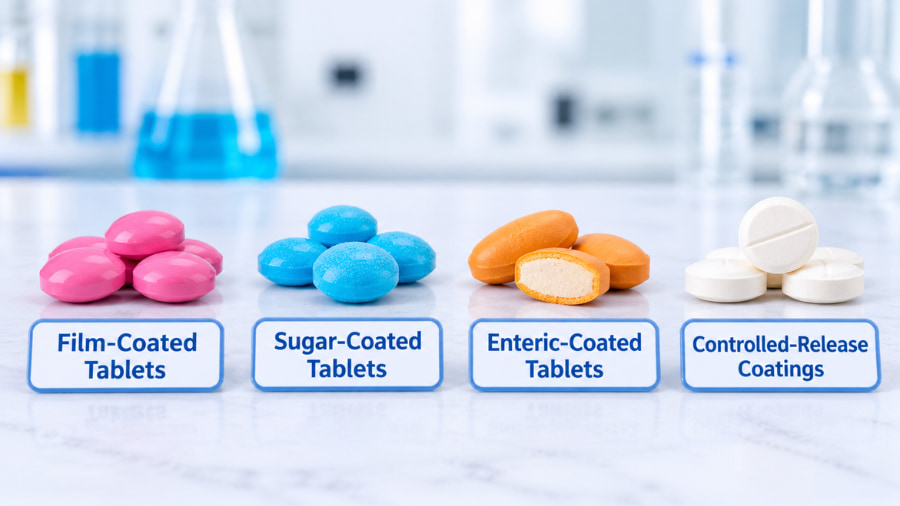
Tablet coatings are special outer layers that protect the medicine, hide bad tastes, and control how fast the drug enters your body. Manufacturers choose different coatings based on how a pill needs to work inside you, making sure they are safe, easy to take, and effective.
- Film-Coated Tablets: Manufacturers spray a very thin, water-based polymer layer over the tablet core. It adds almost no extra bulk, dries quickly, hides bad tastes, and gives pills a smooth and colorful finish. This thin layer makes them easy to swallow and protects them from air damage.
- Sugar-Coated Tablets: Manufacturers cover these tablets with multiple layers of sweet syrup to build a thick, glossy shell. This shiny layer hides bitter tastes completely, but makes them heavier. As this coating masks bitter flavors very well, it is often used for children’s vitamins.
- Enteric-Coated Tablets: Enteric coated tablets meaning is that these pills are wrapped in a special acid-resistant layer that doesn’t dissolve in your stomach. The pill passes safely into the intestine before breaking down.
- Controlled-Release Coatings: These coatings release medicine into your body very slowly over many hours. This helps keep steady medicine levels in your blood, so it reduces how many times a day you need to take a pill.
Note: One of the main advantages of enteric coated tablets is that they prevent stomach irritation and protect sensitive ingredients from harsh stomach acid.
Coated vs Uncoated Tablets: What Are the Key Differences?
Adding an outer shell changes how a pill looks, feels, and works inside your body. Check out the following table to learn about the main difference between coated and uncoated tablets:
| Feature | Uncoated Tablets | Coated Tablets |
| Appearance and Surface | Matte, rough, or slightly chalky texture with a plain finish (with a break line) | Smooth, glossy, and often colorful; may have printed markings |
| Taste and Odour | May leave a bitter, metallic, or distinct medicinal taste and smell. | Outer layer completely hides unpleasant tastes and smells |
| Ease of Swallowing | Can feel dry, chalky, or sticky in the throat, making large pills harder to swallow | Easier to swallow due to a slick, smooth surface |
| Protection from Moisture & Light | More vulnerable to moisture, light, and air; relies mainly on outer packaging | Extra coating shields against moisture, light, and oxygen, extending shelf life |
| Shelf Life and Stability | Tends to spoil faster if not kept in high-barrier packaging | Offers better long-term stability and a longer shelf life |
| Drug Release | Dissolves right away in the stomach for fast action | Can be designed for immediate, delayed (enteric), or slow release |
| Manufacturing Process | Simpler and faster with no extra coating steps required | Requires tablet compression plus extra coating, drying, and quality-control steps |
| Production Cost | Lower cost due to fewer manufacturing steps and simpler formulation | Higher cost due to extra materials, equipment, processing time, and labor. |
How Are Coated and Uncoated Tablets Manufactured?
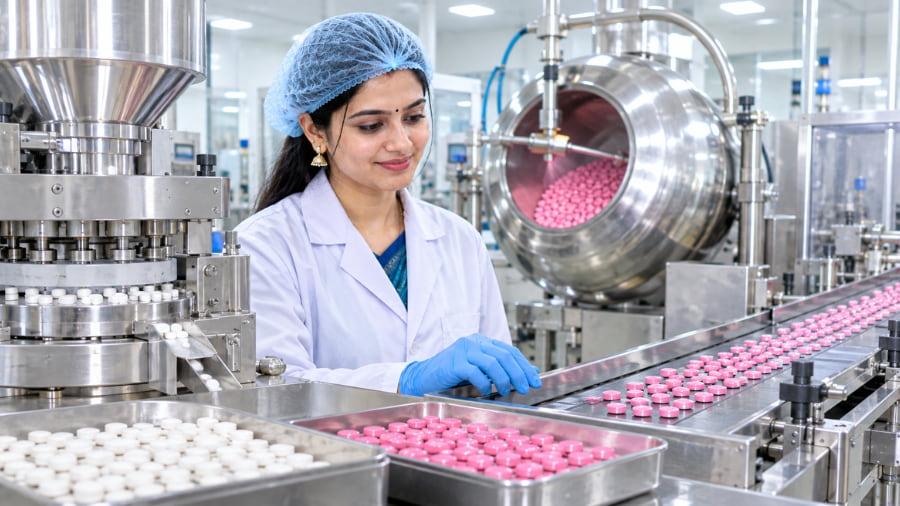
The tablet manufacturing process involves mixing medicine with safe powders and pressing them into solid shapes. Both tablets start on the same production line before taking slightly different paths.
- Tablet Core Preparation and Compression: First, manufacturers blend active ingredients and safe binding powders into a uniform mix. Heavy machines then press this mix firmly into solid tablet cores ready for the next stage.
- Manufacturing Process for Uncoated Tablets: For uncoated tablets, production is much shorter. Once the compressed cores pass through a deduster machine to remove any loose surface powder, they are checked for weight and hardness. After that, they are sent for packing.
- Tablet Coating Process: Plain tablets go into a rotating perforated drum machine. As the tablets tumble inside, spray nozzles spray a thin liquid coating over them. Warm, filtered air dries this layer, hiding bitter tastes and leaving a smooth outer shell.
- Quality Control and Inspection: Before any batch of tablets leaves the factory, quality teams test sample tablets from every batch for safety.
How Does Tablet Coating Affect Packaging and Manufacturing Costs?
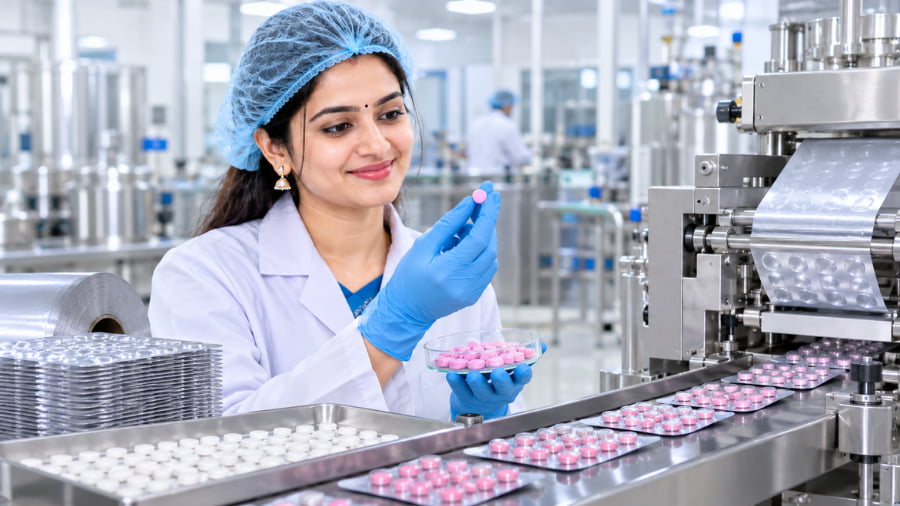
- Extra Factory Time: Adding a coating step takes extra hours on the production line. This increases worker wages, electricity usage, and the total production time.
- Special Equipment Needs: Tablet manufacturing companies in India must buy or maintain costly coating machines and drying systems.
- Cost of Materials: Buying high-quality polymers, colors, and safe solvents adds to raw material costs, especially when using special coatings.
- Lower Reject Rates: While extra coating steps, raw materials, and spraying equipment raise the initial cost per batch of coated tablets, they also save money later by reducing damaged or rejected pills.
- Cheaper Packaging Materials: Coated tablets are much harder, so manufacturers can use lower-cost plastic bottles or thin blister packs safely.
Get Expert Manufacturing Support from Medella Softgel
Choosing between coated and uncoated tablets depends on what the medicine needs. Connect with Medella Softgel for custom third-party manufacturing services for your project. We support brands with certified manufacturing, smart formulation guidance, and reliable packaging across India.
Share your project details with the Medella Softgel team to get expert help in choosing the right formulation, coating type, and packaging.
Also Read: Pharmaceutical Companies in Jammu and Kashmir: Buyer’s Guide