

Tablet Manufacturing Process: Key Steps to Quality Production
Any tablet manufacturing company hoping to provide high-quality medications must comprehend the tablet manufacturing process steps in the highly competitive pharmaceutical production industry. Every steps of tablet manufacturing, from the first raw material selection to the last packaging, requires accuracy, strict quality control, and compliance with legal requirements.
This thorough guide explains the stages of tablet manufacturing involved in making tablets, identifies best practices and shows how Medella Softgel, a top tablet manufacturer, maintains quality. This article provides insightful information about contemporary tablet manufacturing, regardless of whether you’re looking into options with an Indian pharma third party manufacturing company.
Overview of Tablet Production

Active pharmaceutical ingredients (APIs) and excipients are converted into solid dosage forms during the tablet manufacturing process.
Because of their affordability, ease of use, and precise dosing, tablets make up over half of all pharmaceutical dosage forms.
Tablet manufacturers in India are essential to the country’s domestic and international markets, providing goods under their own brands or as contracted solutions for other pharmaceutical companies.
Raw Material Selection and Inspection

1. Active Pharmaceutical Ingredients (APIs) – The purity of the API is crucial. The quality of APIs affects patient safety, bioavailability, and medication efficacy. It is necessary to confirm specifications like moisture content, polymorphic form, and particle size distribution.
2. Excipients – Excipients include lubricants like magnesium stearate, glidants, disintegrants like croscarmellose sodium, binders like PVP, fillers like lactose and microcrystalline cellulose, and other useful components. Tablet stability, dissolution rate, and hardness are all impacted by excipients.
3. Inspection and Testing – Tests for identity, purity, and potency are performed on incoming materials. Pharmacopeial and internal standards are used to verify Certificates of Analysis (CoAs).
A respectable tablet manufacturing company protects the integrity of its tablet manufacturing process steps by implementing strict incoming quality control.



Pre-Formulation Studies

Pre-formulation studies are carried out by formulation scientists to identify the optimal mix of APIs and excipients prior to production scaling.
Among these studies are –
1. Testing for compatibility – Making sure excipients and APIs don’t interact negatively.
2. Flowability and Compressibility Assessments – Evaluations of flowability and compressibility are essential when deciding between wet granulation and direct compression as manufacturing of tablets processes.
3. Stability Studies – Forecasting shelf life in a range of environmental circumstances.
To improve the formulation, platforms like Medella Softgel use advanced analytical techniques like Fourier-Transform Infrared Spectroscopy (FTIR) and Differential Scanning Calorimetry (DSC).
Granulation – Improving Blend Uniformity
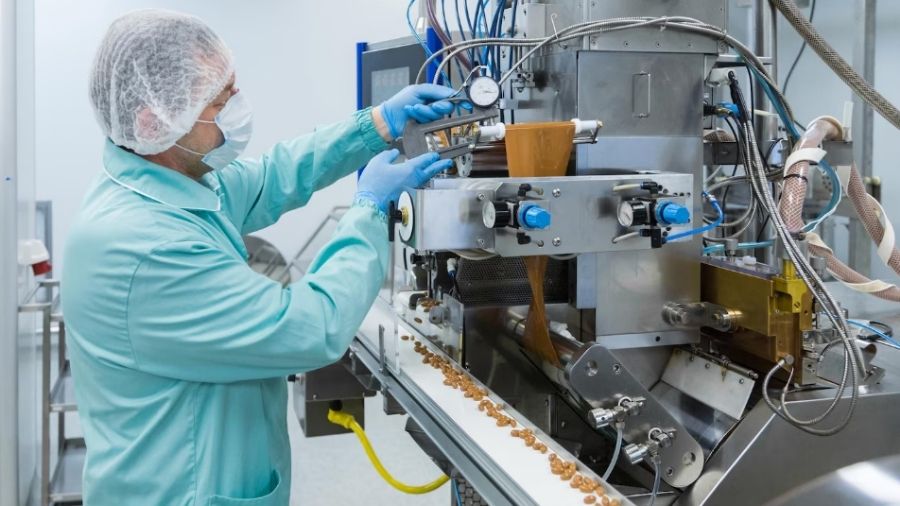
Granulation improves content homogeneity and powder flow, guaranteeing that every tablet has the appropriate dosage of API.
There are two primary methods –
1. Granulation in Wet Conditions
- Slurry Preparation – Making a slurry involves dissolving binders in solvent or water.
- Wet Massing – To create a granule mass, the API-excipient blend is moistened.
- Screening – To attain a consistent size, granules are run through a mesh.
- Drying – To target moisture levels, fluid bed dryers are usually used.
- Sizing – Rescreening to guarantee a uniform distribution of granule sizes.
For formulations that are moisture-stable, wet granulation is still a preferred steps of tablet manufacturing.
2. Granulation that is dry
- Compressors that blend into big compacts are known as slugging or roller compaction.
- Slugs are broken into the appropriate size granules during the milling process.
- Dry granulation uses less energy and works well with APIs that are sensitive to moisture.
Blending and Lubrication
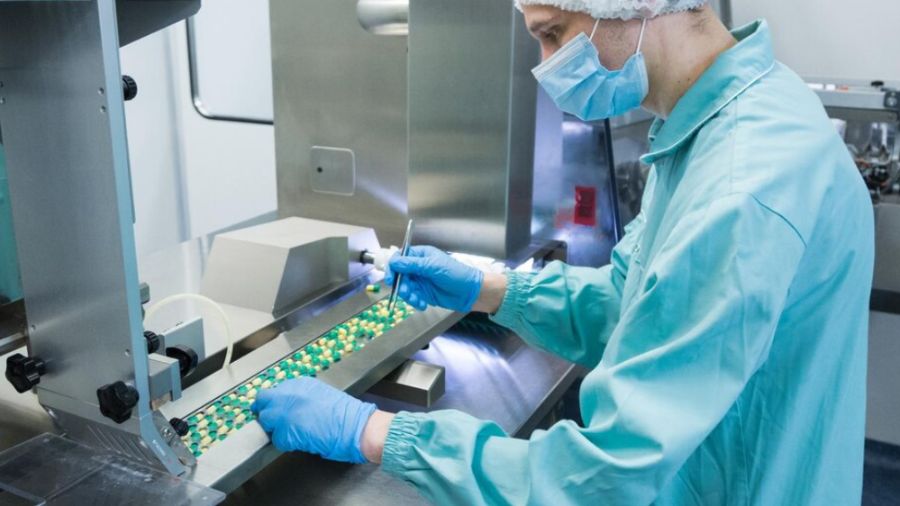
Following granulation, tumbling blenders are used to blend the granules evenly. In order to improve flow and stop die-wall adhesion during compression, lubricants and glideants are carefully added. Process variables like mixing time and shear are strictly regulated because excessive lubrication can affect tablet hardness and dissolution.
Tablet Compression

In this crucial steps of tablet manufacturing, rotary or single-punch presses are used to turn granules into tablets –
1. Die Filling – Granules are funneled into the die cavity during die filling.
2. Pre-Compression – Light pressure is applied during pre-compression to release air and solidify the fill.
3. Main Compression – Creates a sturdy tablet by applying the last high pressure.
4. Ejection – Tablets are forced onto a conveyor after exiting the die.
The weight, width, hardness, and friability of tablets are directly impacted by parameters such as compression force, turret velocity, and tooling design.
Coating – Functionality and Appearance
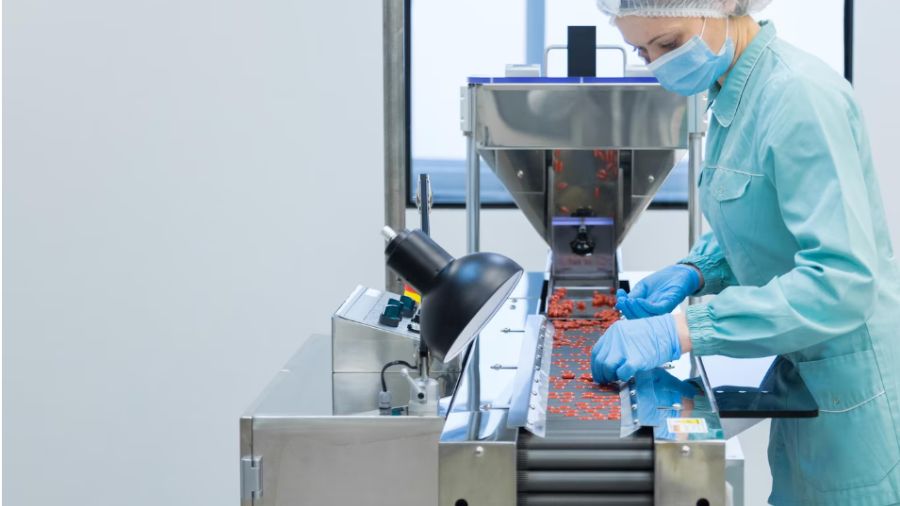
The coating enhances appearance, masks taste, makes swallowing easier and can create functional barriers (e.g., sustained release or enteric).
Typical coatings consist of –
1. Sugar Coating – Traditional, multi-layered, and time-consuming sugar coating.
2. Film coating – Effective, polymer-based, and adaptable for postponed release.
3. Enteric coating – Shields the stomach from irritating APIs or shields APIs from stomach acid.
As a leading tablet manufacturing company, Medella Softgel uses sophisticated coating pans with accurate spray control to guarantee consistency and high production.
Quality Control and In-Process Testing

In-process tests confirm important quality attributes during the tablet manufacturing process –
1. Weight Variation – Guarantees uniformity in dosage.
2. Hardness (Tablet Crushing Strength) – Influences dissolution and handling.
3. Friability – Indicates a material’s propensity to crumble or chip.
4. Disintegration Time – Indicates the rate at which a tablet disintegrates.
5. Dissolution Profile – Evaluate the API’s release rate.
Before being released onto the market, final product samples go through extensive assays, stability studies, and impurity tests in accordance with ICH guidelines.
Packaging, Labeling, and Storage
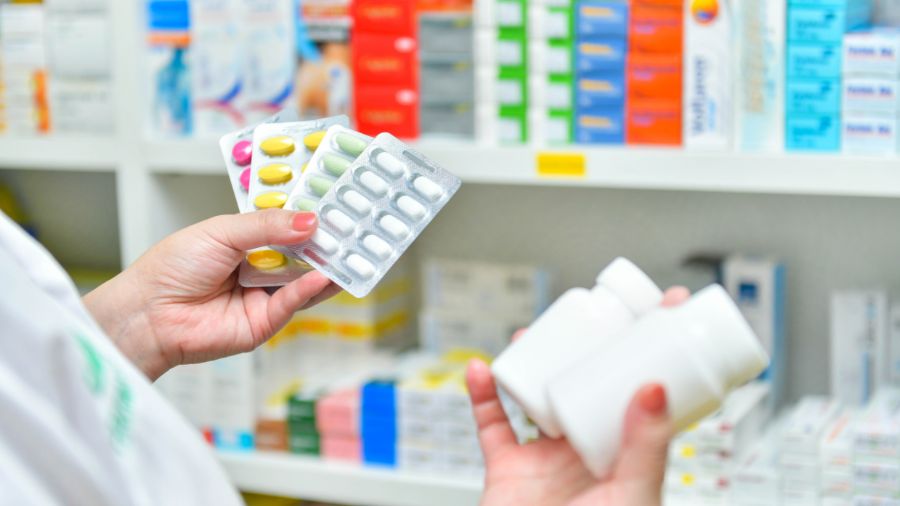
Tablets are protected from light, moisture, and mechanical harm by sturdy packaging.
Among the options are –
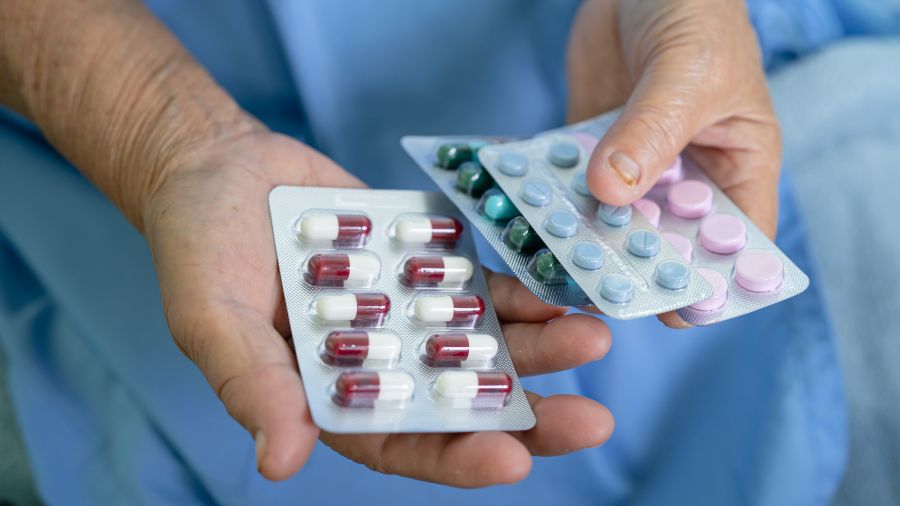
1. Blister Packs – Separate cavities that are covered with film or foil.
2. Strip Packs – Continuous film sealing is used in strip packs.
3. Bottles – Glass or plastic containers that contain desiccants.
Batch numbers, expiration dates, conditions of storage, and regulatory information are all listed on labels. Product integrity is ensured by proper warehousing, which is frequently a component of a network of 3PL Warehousing & Distribution Companies.
Role of Third-Party Manufacturing

Contracting with a tablet manufacturing company provides access to specialized knowledge, flexibility, and cost savings. Indian third-party pharmaceutical producers are well known for providing competitive prices while upholding international quality standards.
Among the main benefits are –
1. Scalability – The ability to quickly adapt capacity to changing seasonal demands.
2. Regulatory Compliance – Internal knowledge of WHO GMP, cGMP, and other global standards.
3. R&D Support – Services for process development and advanced formulation.
Whether you need a third party medicine manufacturer in India, working with reputable companies like Medella Softgel guarantees access to state-of-the-art facilities and technical know-how.
Medella Softgel – A Benchmark in Tablet Manufacturing
Medella Softgel is a unique tablet manufacturing company that provides both third-party pharmaceutical manufacturing solutions and in-house branded production.
Their cutting-edge facilities include –
- Specialized suites for both dry and wet granulation.
- Rotary presses with high speeds and real-time data collection.
- Blister packaging and coating lines that operate automatically.
- Extensive labs for quality control and research and development.
Serving both domestic and foreign pharmaceutical companies, Medella Softgel is a Third Party Pharma Manufacturing company in India that exemplifies what it means to be a trustworthy tablet manufacturing company. Their standing among Indian tablet manufacturers in India is solidified by their dedication to sustainability, process optimization, and ongoing improvement.
Regulatory and Compliance Considerations

Respect for international regulatory requirements cannot be compromised –
- cGMP compliance is confirmed by US FDA and EMA audits.
- Market access is expanded through WHO prequalification.
- Site inspections and product registration are required by local regulatory agencies (such as the CDSCO in India).
Maintaining licensure and market reputation requires typical internal audits, risk evaluations, and CAPA (Corrective and Preventive Actions) systems.
Innovations and Future Trends

The following factors will influence the tablet manufacturing process in the future –
1. Continuous Manufacturing – To increase productivity and lessen environmental impact, batch processes should be replaced with continuous flow.
2. Process Analytical Technology (PAT) – Increased quality assurance through real-time monitoring and control.
3. 3D printing – On-demand production and customized dosage forms.
4. Green Chemistry – Green chemistry is the use of environmentally friendly technologies to reduce waste and solvent usage.
To stay ahead of the competition, top tablet manufacturing companies are investing in these developments, and Medella Softgel is investigating continuous tablet production lines and cutting-edge PAT tools.
Conclusion
Any pharmaceutical stakeholder, from start-ups to well-known brands, must comprehend the intricate stages of tablet manufacturing involved.
Every stage, from choosing and granulating raw materials to compressing, coating, and packaging, requires specialized tools, knowledgeable workers, and an unwavering dedication to quality.
With its extensive network of tablet manufacturers in India, India provides an unmatched experience for those looking for a reliable third-party medicine manufacturer.
Among them, Medella Softgel is a renowned third party tablet manufacturer that demonstrates excellence in the manufacturing of tablets process while providing top-notch Pharma products to international partners.
Pharmaceutical comapny in India can guarantee regulatory compliance, expedite production, and ultimately provide patients around the world with safe, effective, and reasonably priced medications by collaborating with seasoned players and adopting the newest innovations.
Also Read: Top Orthopedic Medicine Manufacturers in India – Quality You Can Trust