

Tablets vs Capsules vs Softgels – Complete Comparison Guide 2026
When you choose a medicine or a supplement, you typically see it in one of three main structures: a tablet, a capsule, or a softgel. While they all serve the same objective, getting the active ingredient into your body, they are fundamentally distinct in how they are constructed, how they work, and what they are best suited for.
Comprehending these distinctions is vital for patients, but it is even more crucial for pharmaceutical corporations and those involved in third party pharma manufacturing company in India to choose the appropriate dosage form for a product. Let’s understand these three forms, the manufacturing procedures, and explore the thriving landscape of medicine manufacturing companies in india.
Tablets – The Foundation of Oral Medication
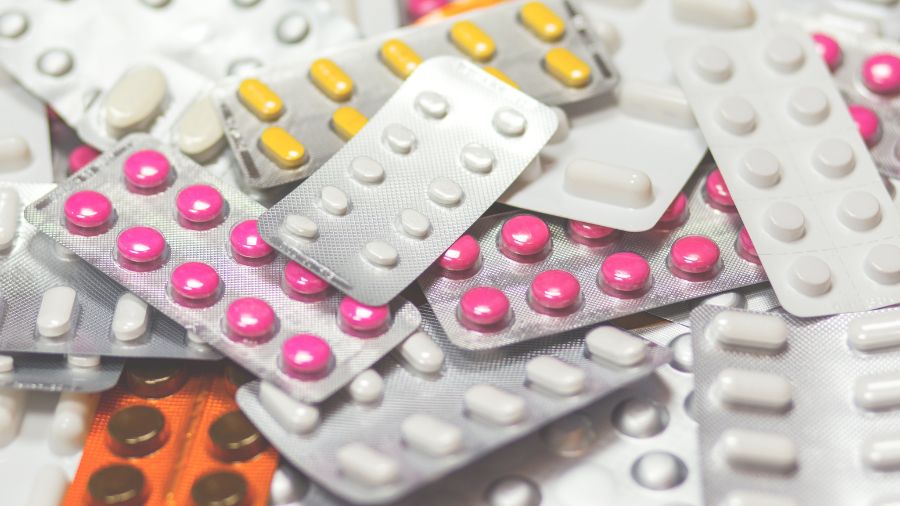
The tablet is the oldest and most typical form of oral medication. Consider it as a tightly pressed powder.
What is a Tablet?
A tablet is a strong, single-unit dosage form made by compressing powdered ingredients. Besides the active drug, tablets contain different inactive ingredients called excipients, like binders, diluents, disintegrants, and colorants/flavorings.
Key Benefits of Tablets –
- Affordable – Tablets are typically affordable to generate, making them cost-effective for customers.
- Stability and Shelf Life – Their compressed, strong form makes them very stable and resistant to environmental aspects such as air and light, providing them the longest shelf life among the three.
- Precise Dosing – The tablet manufacturing process permits remarkably precise and uniform dosages.
- Flexibility – They can be scored, chewable, or developed for different release patterns.



Key Disadvantages of Tablets –
- Swallowing Difficulty – Because of their hard nature and sometimes big size, several people, particularly the elderly or kids, find it tough to swallow.
- Taste/Smell – The active ingredient can usually have an unpleasant taste or odor, even with a coating.
- Absorption Rate – Tablets should first disintegrate and then dissolve so that the drug can be absorbed, which can make them slower-acting than softgels.
The Tablet Manufacturing Process
Tablets manufacturing in India follows an extremely controlled and complicated tablet manufacturing procedure, complying with stringent regulatory norms.
- Mixing/Granulation – The active ingredients and excipients are completely blended. If required, this powder is turned into bigger, more flowable granules.
- Compression – The mixture is fed into a high-speed tablet press, where strong punches compress the powder or granules into the final tablet formation.
- Coating – Several tablets receive a thin film coating for reasons such as taste masking, moisture security, or controlling the release of the drug.
The need for specialized structures has made a big market for a third party tablet manufacturer, who delivers specialization without the client needing to construct their own facility.
Hard-Shell Capsules – The Powder Protector
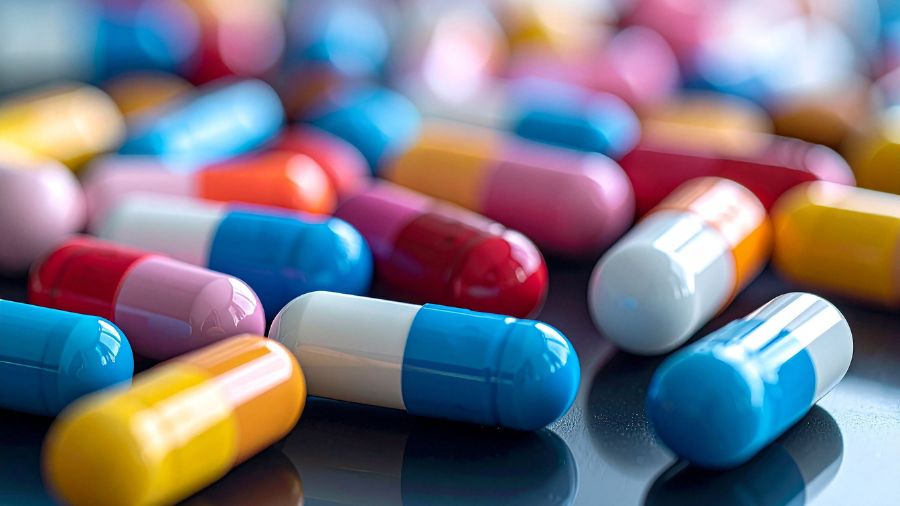
Capsules are crucially small containers developed to hold dry medication.
What is a Capsule?
A hard-shell capsule consists of two pre-formed, cylindrical parts, a body and a cap, which fit ideally together. The shell is generally formed of gelatin or, increasingly, HPMC, a plant-based option suitable for vegan/vegetarian products. The shell holds the medication, typically a dry powder or small pellets/granules.
Key Advantages of Capsules –
- Easy to Swallow – The seamless, elongated shell is typically simpler to swallow than a hard tablet.
- Taste Masking – The shell thoroughly encases the ingredients, effectively hiding any unpleasant taste or odor.
- Faster Action – The gelatin/HPMC shell dissolves very rapidly in the stomach, usually releasing the drug quickly than a tablet, which should first disintegrate.
- Versatility – They are well-suited for a drug blend or for enclosing tiny pellets that have various release properties.
Key Disadvantages of Capsules –
- Susceptibility to Moisture – Capsules are more sensitive to humidity than tablets, which can make the shell brittle or very soft if not stored completely.
- More Costly to Produce – Manufacturing capsules is generally more expensive and slower than tablets.
- Fill Material – They are mainly restricted to dry-fill materials.
Capsules Manufacturing in India
Capsules manufacturer in India uses automatic or semi-automatic filling machines to gain high precision.
The basic stages for capsule manufacturing are –
- Shell Preparation – Empty gelatin or HPMC shells are manufactured in bulk.
- Filling – The shells are separate, the active powder blend is accurately filled into the body, and the cap is placed back on.
- Sealing/Banding – Some capsules are sealed with a thin band to make them tamper-resistant and make sure the contents are packed in.
India has a huge number of professional capsules manufacturer in India, generating everything from generic medicines to specialized nutritional supplements.
Softgels – The Liquid Delivery System
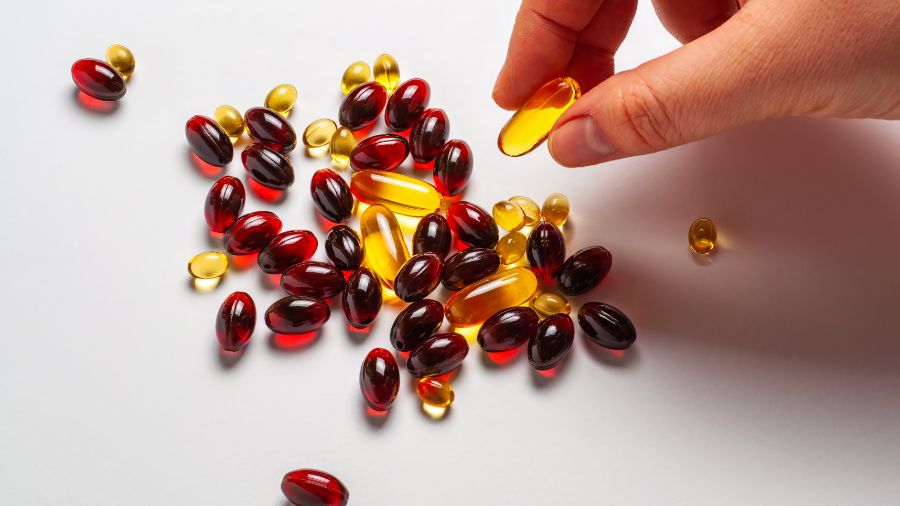
Softgels are the contemporary solution, particularly developed for liquid or oil-based ingredients.
What is a Softgel?
A softgel, or soft gelatin capsule, is a one-piece, thoroughly sealed shell that possesses a liquid, semi-solid, or oil-based drug formulation. The shell is made of gelatin, water, and a plasticizer like glycerin, which makes the shell soft and flexible.
Key Advantages of Softgels
- Superior Absorption – Softgels are a prime benefit for ingredients that are well absorbed when already dissolved in oil. Because the drug is already in a liquid structure, it can be absorbed much quicker and more thoroughly by the body.
- Easy to Swallow – Their seamless, gel-like, and soft exterior makes them the simplest form to swallow.
- Outstanding Protection – The airtight, sealed nature secures the contents from oxidation and light, which is crucial for sensitive oils. This usually results in a longer product life.
- Masking Power – They are outstanding at hiding the unpleasant taste and smell of oils, like fish oil.
Key Disadvantages of Softgels
- Higher Cost – Softgel manufacturing is the most specialized and costly procedure, demanding complicated, controlled-environment machinery.
- Limited Ingredients – Only oil-based or liquid/semi-solid ingredients that do not blend with water can be encapsulated in this form.
- Heat Sensitive – Being soft, they can melt or stick together if exposed to high heat or humidity.
The Softgel Manufacturing Process
Softgel capsules manufacturing in India is an extremely specialized location, usually performed utilizing a method called the Rotary Die Process –
- Gelatin Mass Preparation – Gelatin, plasticizers, and water are blended and heated to make a thick, liquid gel mass.
- Fill Material Preparation – The active drug is blended into an oil and liquid base.
- Encapsulation – The liquid gelatin is fed onto two big rotating drums to form two thin ribbons. These ribbons are brought together between two die rolls. Simultaneously, the liquid fill material is injected between the ribbons, and the die rolls seal and cut the softgel into its final, ideal structure.
- Drying and Quality Control – The fresh, sticky softgels are dried in rotating tumble dryers and then carefully cured in drying tunnels to gain the final, stable moisture content.
The Role of Contact Manufacturing in India
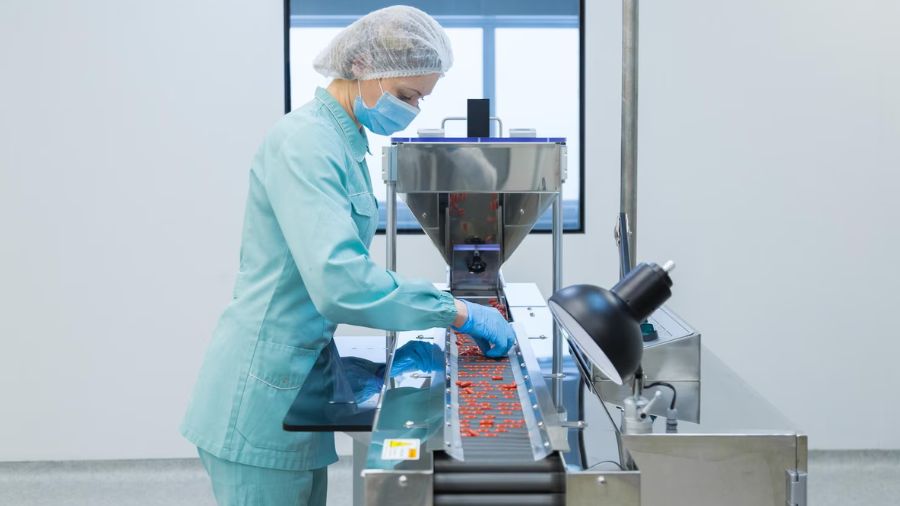
India is renowned as the pharmacy of the world, and its thriving pharmaceutical industry is robustly driven by contract manufacturing in pharmaceutical industry. This model, where one corporation hires another specialized corporation to generate its medicines, is becoming the dominant trend for 2026 and beyond.
Why third party pharma manufacturing is booming in India
1. Cost Efficiency – Medicine manufacturing companies in India deliver remarkably lower running and labor expenses than their counterparts in Western nations, making products more cost-effective internationally.
2. Specialization – Specialized softgels capsules manufacturing in India and tablet manufacturing companies have made investments in high-tech machinery for particular dosage forms. This permits clients to launch items in modern formats without a big capital investment.
3. Scalability – A third party tablet manufacturer can rapidly scale up or down production depending on market demand, delivering adaptability that clients with their own plants usually lack.
4. Regulatory Compliance – Reputable third party pharma manufacturing companies in India are usually WHO-GMP certified and fulfill strict global norms, making sure the quality and protection of the drugs produced.
The dependence on a contract manufacturing in pharmaceutical industry model means that the client brand can pay attention to research, marketing, and allocation, while the manufacturing professionals manage the complicated, quality-intensive production of the tablets, capsules, or softgels.
Conclusion
The selection of a tablet, capsule, or softgel is not arbitrary; rather, it is a calculated The choice depends on the chemical characteristics of the medication, the required rate of absorption, the need for stability, and manufacturing cost.
- Tablets remain the traditional option for the most affordable, high-dose, and stable products.
- Capsules are recommended for quick-release dry ingredients that require effective taste masking.
- Softgels are the best option for oils and ingredients where fast and high absorption is essential, which is driving the growth of specialized softgel capsule manufacturing in India by companies like Medella Softgel.
As the industry evolves, customers can expect a wider range of dosage forms designed to deliver optimal health benefits, especially with the rise of trusted third-party pharma manufacturing company in India such as Medella Softgel, offering advanced and diverse formulation capabilities.
Also Read: Microbial Testing Innovations Shaping Indian Pharma Industry