

Innovations in Microbial Testing Shaping the Indian Pharma Industry
The Indian pharmaceutical sector is a worldwide titan and is often called the “Pharmacy of the World.” The rigorous quality control measures are the most important factors, and Microbial testing has become a key element in the process of guaranteeing product safety and effectiveness.
In the diverse scenario of production, where a third-party pharma manufacturing company in India, or companies in the pharmaceutical industry engaged in contract manufacturing, are dealing with, the microbial testing innovations are of great importance for keeping up with global compliance, facilitating the release of products, and lowering the possibility of expensive recalls.
The Critical Role of Traditional Microbial Testing
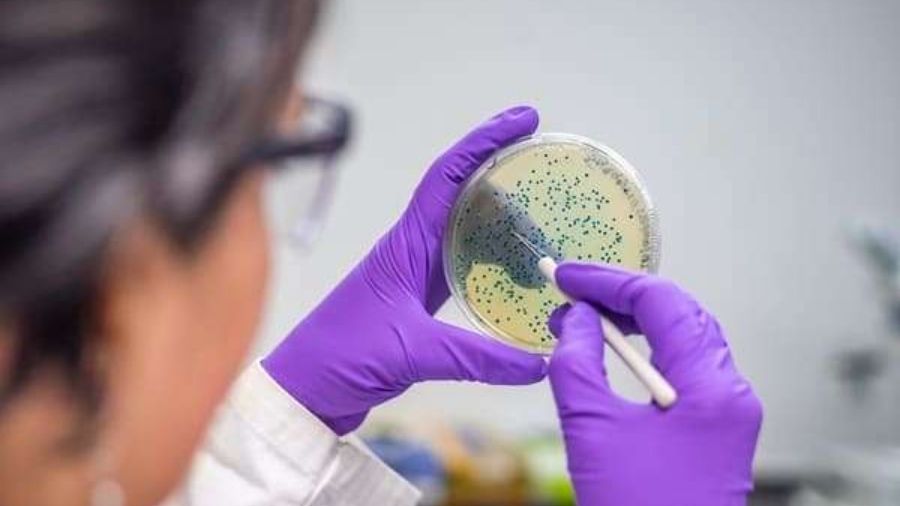
It’s crucial to comprehend the standard tests that form the baseline of pharmaceutical quality control. These traditional techniques depend on culturing microorganisms, which takes time but delivers trustworthy, regulatory-approved data.
Key Traditional Microbial Testing–
1. Sterility Testing – Verifying complete absence of viable microorganisms. It is a necessity for sterile products such as injectables, eye drops, and IV fluids.
2. Bacterial Endotoxin Testing (BET) – Involves the detection of pyrogens (fever-causing substances) from the bacteria that are Gram-negative. It is a requirement for drugs that are injected and medical devices that come in contact with blood or spinal fluid.
3. Microbial Limit Testing (MLT) – A test to find out the total count of aerobic microorganisms (bacteria, fungi, and yeasts) and also to confirm that there are no specific harmful pathogens (for instance, E. coli, Salmonella). It is applicable to non-sterile products such as tablets, capsules, syrups, and creams.
4. Preservative Efficacy Testing (PET) – Gets the product challenged with microbes to prove that the added preservatives can efficiently block the microbial growth during the product’s shelf life. Multi-dose, non-sterile products.
For any pharma third party manufacturing company, carrying out these tests on raw materials, water systems, the manufacturing environment, and the final product is a fundamental requirement of Good Manufacturing Practices (GMP) that cannot be negotiated.



The Need for Speed – The Rise of Rapid Microbiological Methods (RMMs)
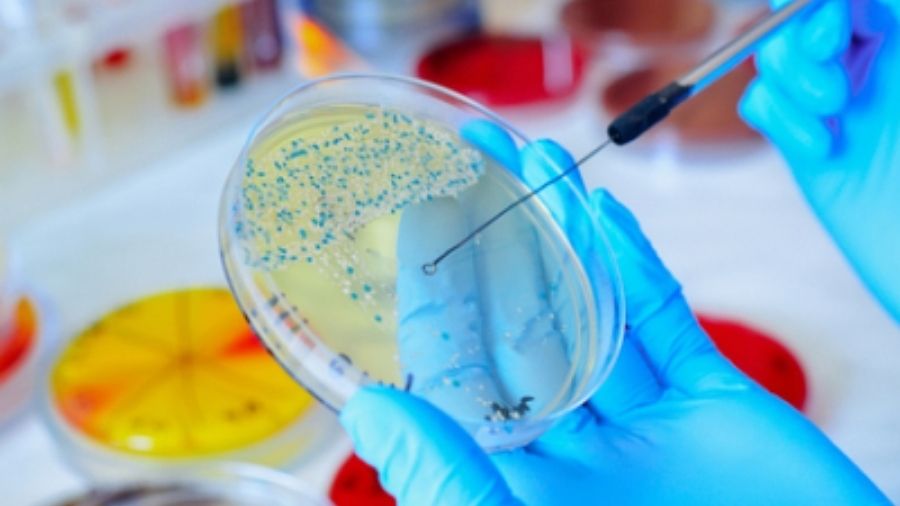
Standard strategies for microbiological testing have extended incubation times. The fast-paced environment of the pharmaceutical industry necessitates speedy delivery to market and the ability to effectively manage inventory. As such, the incubating time associated with these strategies presents an issue for the pharmaceutical manufacturing community.
The development of RMMs (Rapid Microbiological Methods) has been a result of the need to eliminate this lag in time, and hence, the future of the Indian Pharma community in terms of being more efficient while reducing risk will depend on the increased acceptance of RMMs.
Key RMM Innovations Shaping QC –
1. ATP Bioluminescence – Bioluminescence Measurement of ATP levels/amount of light developed when the enzyme + Microbial ATP react. The amount of Light measured can be correlated to the number of live cells present in the sample. Provides a quick determination of contamination levels for raw material or water (Results received in Minutes/Hours).
2. Autofluorescence Detection – Living Cells of all types produce Fluorescent Light when excited with a Blue Laser. The light produced can be used to detect colonies before the colony is visible. The detection of Autofluorescent Light allows for reduced time to obtain results for Sterility Testing and Microbial Limit Tests, as well as allowing for product release quickly.
3. Flow Cytometry – Used for the rapid enumeration and characterization of individual cells in a fluid stream. Flow Cytometry techniques measure Cell Size (Light Scattering) and Fluorescence (Color). It is a useful tool for the quick determination of the bioburden and real-time monitoring of Water Quality.
4. Real-Time Air Monitoring (BFPC) – Continuous Air Sampling is done using Biofluorescent Particulate Counters (BFPCs). Biological Particulate Counters use Laser Induced Fluorescence (LIF) technology to differentiate between Biological Particles and Non-Viable Dust Particles. Therefore, they can give real-time notifications of contamination in a cleanroom and allow you to take corrective action quickly, which is key to Aseptic Manufacturing.
The use of RMMs greatly improves the overall contamination prevention system, especially in a highly regulated environment, as is often the case in contract manufacturing in pharmaceutical industry.
Beyond Counting – Advanced Microbial Identification Techniques
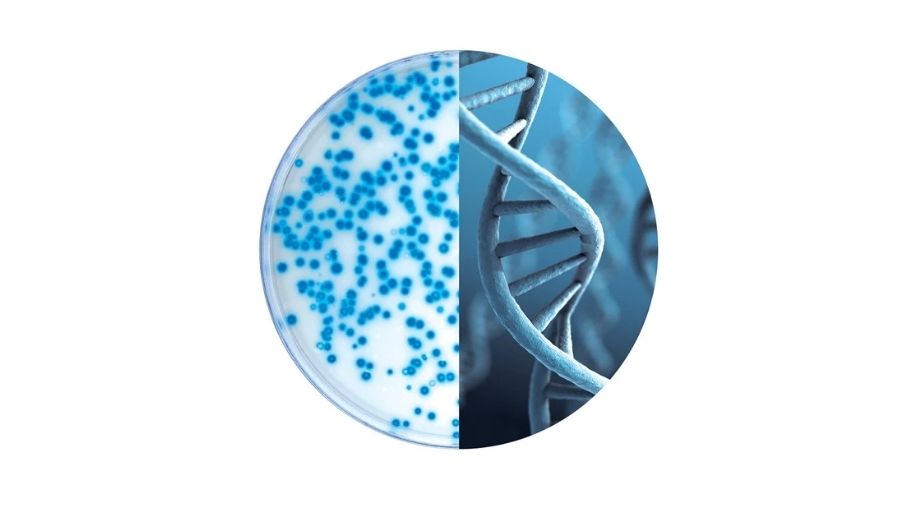
Identifying a microbial contaminant is just as important as detecting it. Once a microbial contaminant is detected, identifying the specific organism that exists will help determine the root cause of the contamination, allow for future prevention of the same type of contaminant appearing in the same or other environments, and ensure compliance with regulatory requirements.
Moreover, while once primarily based on observing a microorganism’s metabolic responses (such as the specific sugars that can be fermented), microbial test has largely been replaced by advanced molecular and spectral technology.
Molecular and Spectroscopic Identification –
1. Polymerase Chain Reaction (PCR) and Real-Time Polymerase Chain Reaction (Real-Time PCR) –
- Principle – DNA extraction methods are utilized to rapidly amplify specific unique DNA sequences for a given microorganism.
- Benefit – PCR and real-time PCR provide rapid, sensitive, and specific means for detecting and identifying potential pathogens within hours instead of traditional culture and isolation methods that can take days.
2. MALDI-TOF Mass Spectrometry (Matrix-Assisted Laser Desorption/Ionization – Time of Flight) –
- Principle – Microorganism samples are ionized, and then the unique protein fingerprint of each is determined.
- Benefit – Identifies species within minutes accurately using less complicated methods than traditional multi-day microbial biochemical test methods; therefore, this will substantially expedite the identification of bacterial contaminants from environmental monitoring plates.
3. FTIR (Fourier Transform Infrared Spectroscopy) –
- Principle – The infrared absorption spectra (a fingerprint of molecular structure) of the microorganism are measured.
- Benefit – The infrared absorption spectra can be utilized to rapidly and non-invasively identify and classify bacterium and fungus isolates.
The approval of the above technologies by the Indian Microbiological Testing Laboratories reflects the commitment of the testing industry to meet global standards in regards to the safe use of microbiology testing methods.
The Role of Third-Party Manufacturing in Driving Innovation
India’s pharmaceutical ecosystem is distinguished by a powerful existence of third-party manufacturers, also renowned as Contract Manufacturing Organizations (CMOs). A respected third-party pharma manufacturing company in India is a significant driver of these testing innovations.
Advantages of CMOs and Advanced Testing –
1. Expertise and Financial Backing – Smaller and marketing-oriented businesses may be unable to afford the large amounts of capital that are needed to develop high-tech QC laboratories or RMM systems. By collaborating with a larger pharma third party manufacturing company, they are granted immediate access to RMMs (such as MALDI-TOF and rapid sterility testing) and additional technical expertise.
2. Compliance with Regulatory Authorities – The best CMOs have received accreditation from international organizations like WHO-GMP, and they have accumulated a significant amount of experience and knowledge in preparing for audits from some of the world’s most significant regulatory authorities. The investment in new microbiological testing methods demonstrates that each batch produced by contract manufacturing in pharmaceutical industry meets the most current uniform and licensed pharmacopeias worldwide.
3. Risk Management – Once a product is contracted out for manufacture, the responsibility for its quality belongs to the CMO. CMO use of RMMs can minimize the possibility of contaminated products being released by a CMO and substantially decrease the cost to both the producer and the seller associated with recall of those products. RMMs have also enabled CMOs to develop and implement much more stringent control and oversight of their manufacturing environment.
Future Trends and Challenges
Microbiology testing in India is at a stage of evolution towards full automation and integration with data systems.
1. Digital Transformation – The next stage of this evolution will be the integration of RMM data directly into LIMS and the use of AI to analyze trends, enabling manufacturers to forecast contamination risks before they lead to batch failure.
2. Focus on AMR – With the global issue surrounding AMR, the advancement of microbiology testing is essential for the prediction of antibiotic resistance. This type of testing aids in the progression of new drugs, including Nafithromycin, which is a new antibiotic produced in India, and assists in the effectiveness of current antibiotics.
3. Challenges – There are two primary challenges impeding the wide-scale adoption of RMM –
- Cost – The initial investment required for RMM instruments (such as MALDI-TOF or autofluorescent detectors) can be quite high.
- Validation – All RMMs must undergo a lengthy and rigorous validation process indicating they are equivalent or superior to traditional compendial methods, as mandated by regulatory authorities.
However, the commitment of companies like Medella Softgel to better quality, shorter turnaround times, and global competitiveness will continue to drive the development and success of microbial testing innovations within the Indian pharmaceutical industry.
Also Read: Drugs Bioavailability Explained – Key Insights for Pharma Experts