
Innovative Technologies Transforming Pharma Manufacturing in 2026
Innovative technologies are transforming pharmaceutical manufacturing trends in 2026. The integration of Artificial Intelligence, continuous manufacturing, and other technologies is being widely explored and adopted to reduce costs and simplify complex workflows.
Pharmaceutical manufacturing trends have introduced new, innovative methods of pharma production. This has allowed manufacturers to adopt smarter ways to monitor batches, manage equipment, and reduce delays in the process. New technologies such as digital twins, connected manufacturing systems, biomanufacturing, and artificial intelligence for predictive quality control have made pharma manufacturing faster, more precise, and better managed.
Businesses that are in pharma manufacturing should know these trends, their potential, and understand how they can use them by connecting them with human knowledge and experience.
Major Pharma Manufacturing Trends in 2026
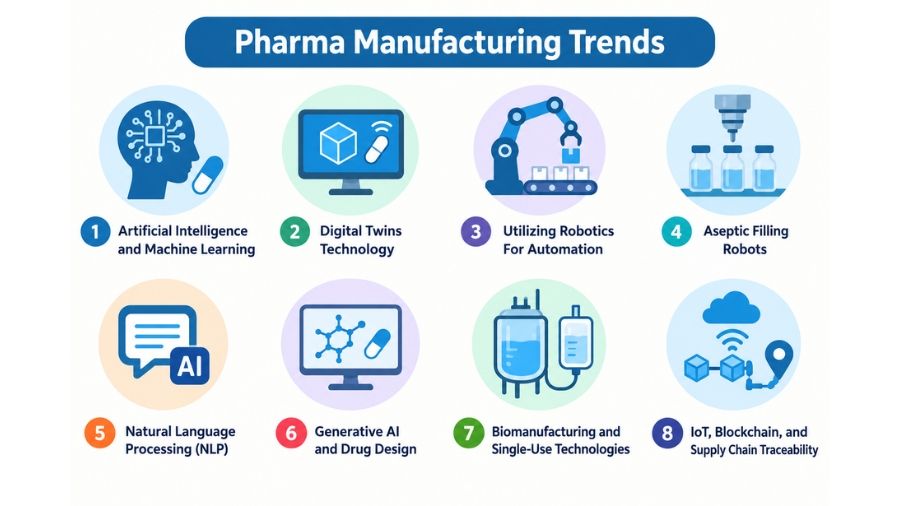
Look at some of the new and highly efficient pharmaceutical manufacturing trends in 2026:
1. Artificial Intelligence and Machine Learning
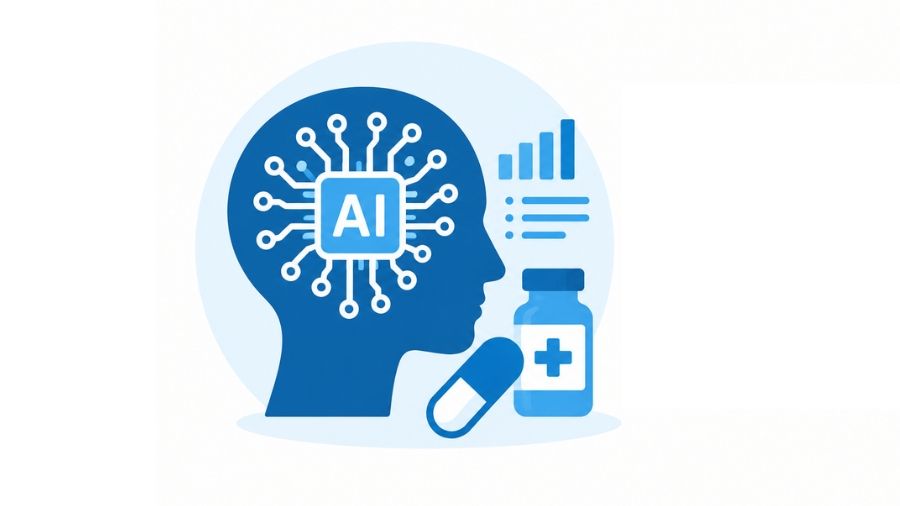
Artificial Intelligence (AI) in pharma production can improve how medicine batches are monitored for quality. It can be integrated into camera systems, which will help inspect thousands of capsules in real time. Cameras using AI systems can detect cracks, color inconsistencies, or missing imprints with high accuracy.
Further, technicians can build more efficient production parameters by analyzing all the previous batch data through Machine Learning (ML) algorithms. Thus, such use of AI in pharmaceutical manufacturing helps reduce material waste and energy being consumed in the production process.



2. Digital Twins Technology
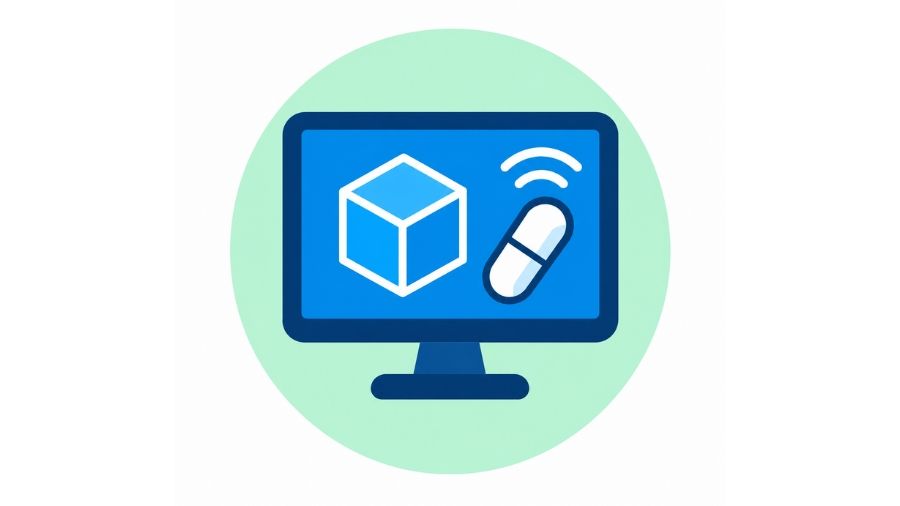
Another among the pharmaceutical manufacturing trends is digital twins technology. It is a technology that creates real-time, virtual models of manufacturing units, biological processes, and equipment. It helps manufacturers predict equipment degradation, anomalies in tank levels, and inconsistencies in flow rates even before any type of failure occurs.
3. Utilizing Robotics For Automation
The use of robotics as a pharmaceutical manufacturing technology has increased at a great rate. To reduce human errors, maintain pharma products quality standards in every batch, and handle production at a large scale, manufacturers are using a variety of robotic equipment.
In addition to that, Autonomous Pharmaceutical Laboratories is a great example, in which scientists can perform experiments using AI software with robotic laboratory equipment.
4. Aseptic Filling Robots
India is becoming a large producer and exporter of vaccines and generic injectable medicines. Aseptic filling robots are also contributing to this growth at the pharma production level.
These robots are automated mechanical arms that are used in cleanrooms to fill sterile medicines into vials or syringes, ensuring precise dosing with no human contact for safety and quality standards.
5. Natural Language Processing (NLP)

Medicine manufacturing companies in India are adopting Natural Language Processing (NLP) to catch errors early and speed up quality check procedures. Through this program, they convert the messy written human records, such as equipment logs, compliance reports, and research papers easily into clear, readable form.
- Reading and Checking Factory Logs (Quality Control)
- Managing Rules and Government Paperwork
- Fixing Equipment and Tracking Issues
- Safety and Side-Effect Reporting
6. Generative AI and Drug Design
With the help of Generative AI systems, manufacturers reduce drug design time significantly, unlike the conventional approach that takes longer. Not just in pharmaceuticals, but in the biotechnology sector as well, generative AI is helping make great progress in research and development (R&D).
In addition, AI can help evaluate a large number of compounds and predict how molecules interact with a biological target, although the prediction may require experimental verification.
Also, Generative Adversarial Networks (GANs) and Variational Autoencoders (VAEs) can create entirely new molecular structures, but their effectiveness needs to be studied further.
7. Biomanufacturing and Single-Use Technologies
Biomanufacturing and single-use technology, among other pharmaceutical industry trends, have transformed production by moving from traditional setups to sterilized polymer and disposable systems.
Some examples are disposable bioreactors, mixers, storage bags, tubing, connectors, and filtration assemblies. These are heavily used in upstream cell cultures, media preparation, and downstream purification for biologics, biosimilars, and vaccines.
8. IoT, Blockchain, and Supply Chain Traceability
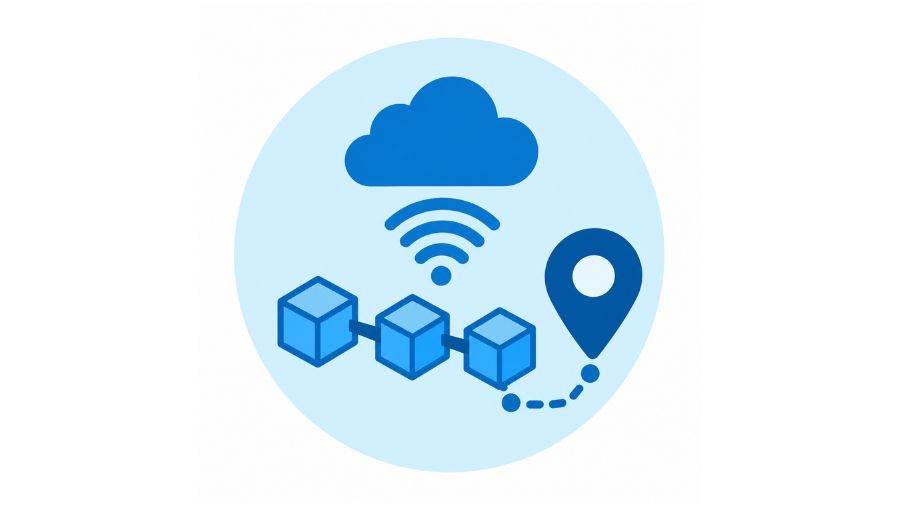
IoT, blockchain, and supply chain traceability in pharmaceutical manufacturing trends 2026 have defined how medicines are tracked for high-quality raw materials, secured, and verified.
- IoT (Internet of Things)
Manufacturers attach smart sensors, RFID tags, and GPS trackers to medicine batches for monitoring location, shock during transport, and environmental conditions, such as temperature and humidity.
- Blockchain
By using blockchain technology, third party pharma manufacturing companies in India can easily maintain drug records, from raw materials to the finished product.
- Supply Chain Traceability
Using serialized QR codes and barcodes on the medicine packs helps chemists and consumers track where it was manufactured, packed, and other important information.
Conclusion
The pharma manufacturing industry is witnessing various technological changes and updates that are improving the whole medicine production process. The continuous tech advancements in AI, machine learning, digital twins, and robotics are offering new, unique ways to maintain quality standards and practically manage complex production processes.
If you want to outsource medicine production for your company, connect with Medella Softgel Pvt. Ltd. We are a WHO-GMP-certified third-party and contract manufacturing company in India. With years of experience, we offer dependable manufacturing solutions by using modern, innovative technologies and equipment. Thus, trust us and contact us today to secure one of the best pharma manufacturing solutions in India.
Also Read: Aceclofenac Tablet: Uses, Side Effects, Dosage & Safety Guide