
Schedule M Compliance: What Changed for Indian Pharma Manufacturers
Schedule M ensures that a pharma manufacturing firm aligns with the necessary WHO-GMP standards. However, with the recent revisions in Schedule M, Indian pharma manufacturing companies are required to shift from a basic paper checklist to an active, system-based quality and risk management culture.
Indian pharmaceutical manufacturers need to align with the latest Schedule M compliance in pharma revisions in order to ensure stronger production systems. This revised framework puts more focus on how quality systems actually work in daily operations, how risks are determined, and how processes are validated. This means pharma entities need to incorporate better manufacturing practices, along with key emphasis on quality, equipment, workforce, and documentation. Let’s take a closer look at what Schedule M is, its latest revisions, the impact on third-party pharma manufacturing company, and more.
What is Schedule M Compliance?

Schedule M is a key part of the Drugs Rules, 1945 of India, which clarifies Good Manufacturing Practices and requirements for pharmaceutical establishments, machines, and facilities. In simple terms, it outlines how manufacturers of drugs and medicines should ensure the quality of the pharma products manufactured by them.
The amended version of Schedule M Compliance for Pharma Manufacturers has even more clear requirements on quality assurance systems, risk management, validation, data and documentation, buildings, equipment, and personnel. Therefore, according to these revisions in this framework, manufacturers are required to incorporate appropriate systems and procedures and document them.



Key Changes in the Revised Schedule M
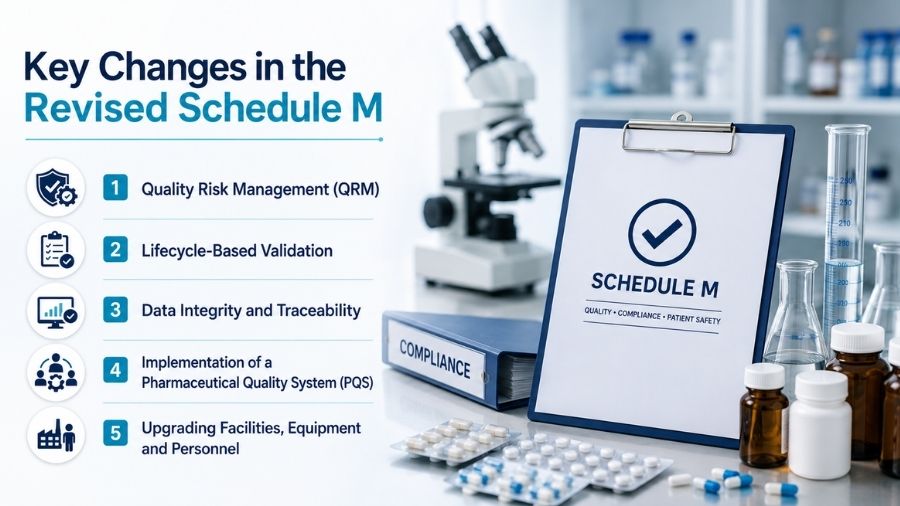
Changes made in the framework bring about significant modifications to how companies within the pharmaceutical sector should manage their quality control processes and their manufacturing operations.
Here are some of the key aspects of this revision:
1. Quality Risk Management (QRM)
It is necessary for manufacturing companies to be aware of potential quality risks and their effects. They must be willing to take applicable measures to control these risks and ensure that their pharma manufacturing license does not get cancelled. QRM is integrated into quality system processes rather than representing an isolated technique to be used when issues arise.
2. Lifecycle-Based Validation
Validation is no longer a one-time case. Under the Schedule M Compliance requirements, manufacturing companies should think about the entire lifecycle of their processes, systems, and equipment, so they have to establish adequate monitoring and reviewing practices that will lead to appropriate functioning of the processes.
3. Data Integrity and Traceability
The revised Schedule M in India enables companies to give additional attention to having data that is reliable and traceable. Manufacturing and quality records should be characterized by accuracy, completeness, proper maintenance, and availability. Therefore, alignment with this aspect is extremely necessary.
4. Implementation of a Pharmaceutical Quality System (PQS)
A Pharmaceutical Quality System gathers together various activities related to quality in one consolidated structure. Top management is responsible for making sure the system is properly implemented and effective throughout the whole organization.
5. Upgrading Facilities, Equipment and Personnel
Schedule M Compliance for Pharma Manufacturers means that they ought to pay enough attention to the buildings, equipment, utilities, laboratories, cleanliness, and level of training of their staff members in the manufacturing establishments. These factors firmly guarantee consistent quality of production and should be maintained in accordance with prescribed documents.
Impact of Schedule M on Third Party Pharma Manufacturers
For GMP compliance in India, third-party manufacturers are obliged to improve their systems as they produce medicinal products for other companies. New requirements may influence both their internal activities and relations with clients.
Let’s take a closer look at its impact on these manufacturers:
- Improved Quality Systems: Third Party Pharma Manufacturing Companies are now required to have organized quality systems that ensure production consistency and effective control of their manufacturing operations.
- Enhanced Client Trust: Effective procedures, documentation, and quality assurance can support contract manufacturers in adhering to the requirements of GMP Compliance in India and in establishing greater trust among pharmaceutical companies.
- End-to-End Record Keeping: The processes of production, testing, validation, and quality must be recorded and stored properly with respect to revised Schedule M in India to ensure traceability.
- Tighter Process Control: In accordance with the Schedule M Pharmaceutical Manufacturing, contract manufacturers must have more control over their production methods, machinery, supplies, and quality processes. This ensures that all of their operations are intact.
- Frequent System Checking: Contract manufacturers must keep assessing their systems and identify areas where processes, facilities, equipment, or documentation may require improvement.
How Medella Softgel Adapted to the Revised Schedule M

In the case of Third Party Pharma Manufacturing Companies like Medella Softgel, adjusting to new Schedule M involves improved quality assurance measures rather than a mere paperwork exercise.
Here is how we adhere to the framework:
- Strengthening Quality Practices: Medella Softgel has made its manufacturing processes more systematic in terms of quality assurance so that the different units that are involved in production are clear about their roles in the manufacturing process.
- Improved Process Control: We review our manufacturing processes, identify possible quality risks, and strengthen controls to support reliable and consistent pharmaceutical production as per Schedule M Pharmaceutical Manufacturing guidance.
- Improving Documentation: We maintain proper records and controlled documents to maintain traceability, demonstrate completed activities, and make important manufacturing information easier to review.
- More Attention to Equipment & Infrastructure: Regular attention to the equipment, utilities, production premises, and the services that support manufacturing enables us to maintain favourable production conditions and safeguard our pharma manufacturing license.
- Quality-Focused Workforce: Training and designation of responsibilities allow the employees to be aware of the company’s quality requirements and ensure that the processes are followed according to revised Schedule M in India.
Conclusion
The revised Schedule M shows a drastic turnaround in the approach taken by drug manufacturers to quality management. There will now be more emphasis laid on factors like risk management, validity of data, quality systems, validation, equipment, and human resource qualification. It also means that contract manufacturers will gain even more confidence from their clients and maintain better consistency in their production methods.
As a leading third-party pharma manufacturing company, Medella Softgel shows its readiness for modern manufacturing processes by working toward putting in place sophisticated management systems, processes, and documentation.
Also Read: Minimum Order Quantity in Pharma Manufacturing Explained