
Tizanidine Tablets – Uses, Side Effects, Dosage & Safety Guide
Tizanidine is a short-acting skeletal muscle relaxant mainly utilized to treat spasticity, muscle spasms, cramping, and tightness caused by conditions like multiple sclerosis, spinal cord injuries, or stroke. It works by blocking nerve signals in the brain and nervous system that lead to muscles to contract.
A robust base in health literacy is key to handling any medical condition. When it comes to handling muscle stiffness and spasms, Tizanidine Tablets are among the most prescribed solutions. This detail gives a thorough look at everything you have to understand about this medication, from its main uses and dosage to the protection precautions you have to follow.
What Are Tizanidine Tablets?
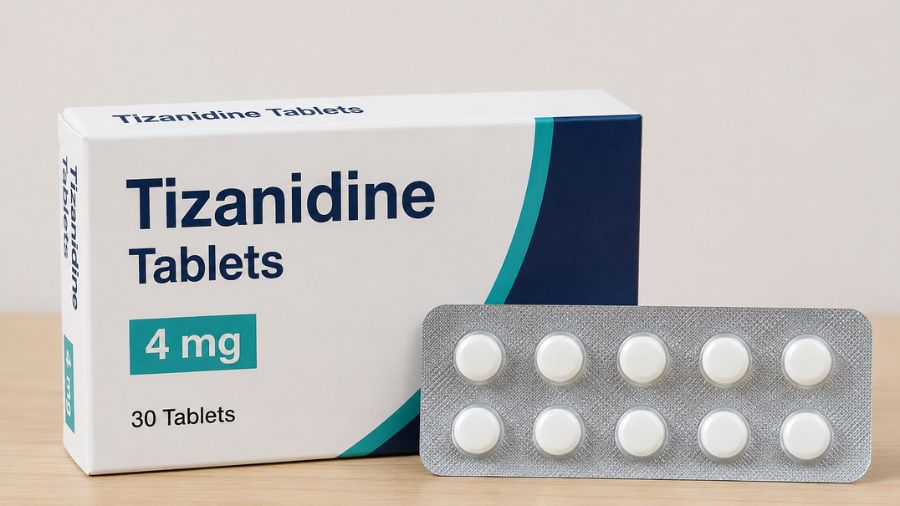
Tizanidine Tablets belong to a class of drugs renowned as skeletal muscle relaxants. They act by stopping pain sensations that are sent to your brain. Crucially, they slow down action in the brain and nervous system, which permits overworked or cramped muscles to finally relax.
In the medical world, you will usually see them referred to as Tizanidine Tablets IP 2mg. The IP stands for Indian Pharmacopoeia, which is the official set of standards for all drugs manufactured, sold, and consumed in India.



Tizanidine Tablets Uses – Why is It Prescribed?
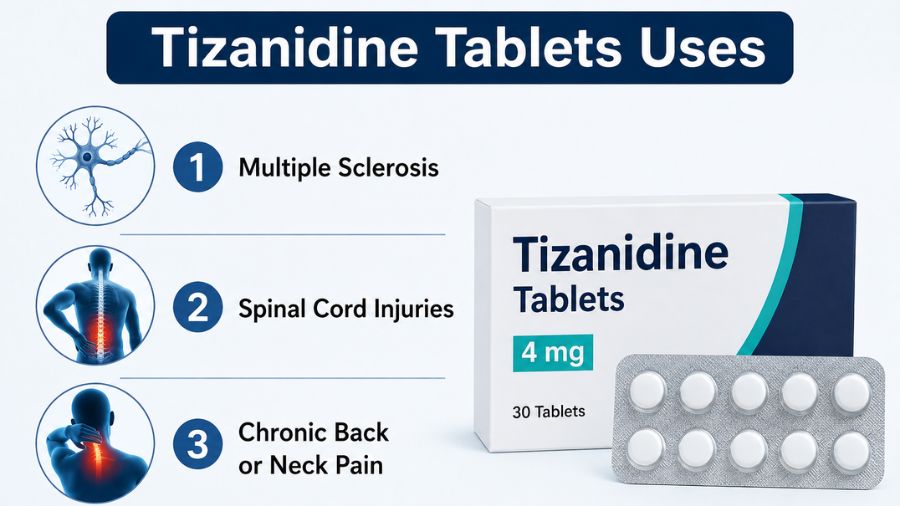
The main objective of this medication is to treat spasticity. This is a condition where muscles stay contracted, making them stiff and difficult to move.
1. Multiple Sclerosis (MS) – MS is a disease that impacts the central nervous system, usually resulting in severe muscle tightness and loss of coordination. Tizanidine tablets uses include assisting MS patients in regaining some mobility by easing this stiffness.
2. Spinal Cord Injuries – Harm to the backbone can interrupt the signals between the body and the brain, resulting in involuntary muscle spasms. Tizanidine assists in calming these signals.
3. Chronic Back or Neck Pain – Sometimes, severe muscle tension in the back or neck does not react to common painkillers. Doctors may prescribe a Tizanidine tab 2 mg to assist the muscle in releasing its grip.
Dosage – How to Take Tizanidine Tab 2 mg

Dosage is extremely personal. Because Tizanidine can lead to remarkable drowsiness, doctors typically begin with a very low dose.
Standard Dosage Guidelines –
- Starting Dose – Typically, a single Tizanidine tab 2mg taken every 6 to 8 hours.
- Maximum Dose – Most patients don’t exceed 3 doses in a 24-hour period. The overall regular limit is generally 36 mg.
- Consistency is Key – Tizanidine can be taken with or without food, but you need to be consistent. Eating it with food one day and on an empty stomach the next can alter how much of the medicine your body absorbs.
Never stop taking this medicine suddenly. Suddenly quitting can lead to rebound symptoms like a racing heart and high blood pressure. Your doctor will assist you in tapering off slowly.
Potential Side Effects
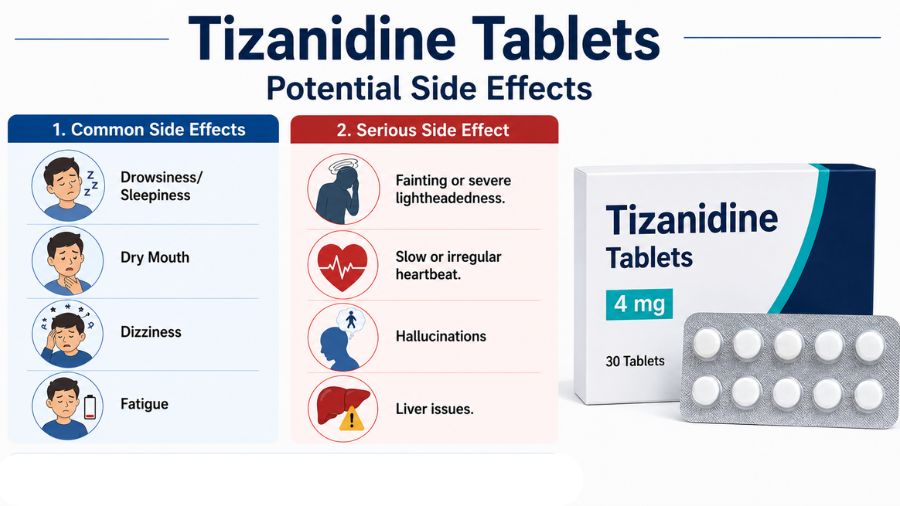
Like all medications, Tizanidine can lead to side effects. Most are mild and go away as your body gets accustomed to the drug, but some demand instant medical attention.
1. Common Side Effects –
- Drowsiness/Sleepiness – This is the most typical effect. You have not driven or operated machinery until you understand how the drug impacts you.
- Dry Mouth – Several users experience a dry or cotton mouth.
- Dizziness – You may feel lightheaded, particularly when standing up rapidly.
- Fatigue – A typical feeling of tiredness or weakness.
2. Serious Side Effects –
- Fainting or severe lightheadedness.
- Slow or irregular heartbeat.
- Hallucinations
- Liver issues.
Safety and Precautions
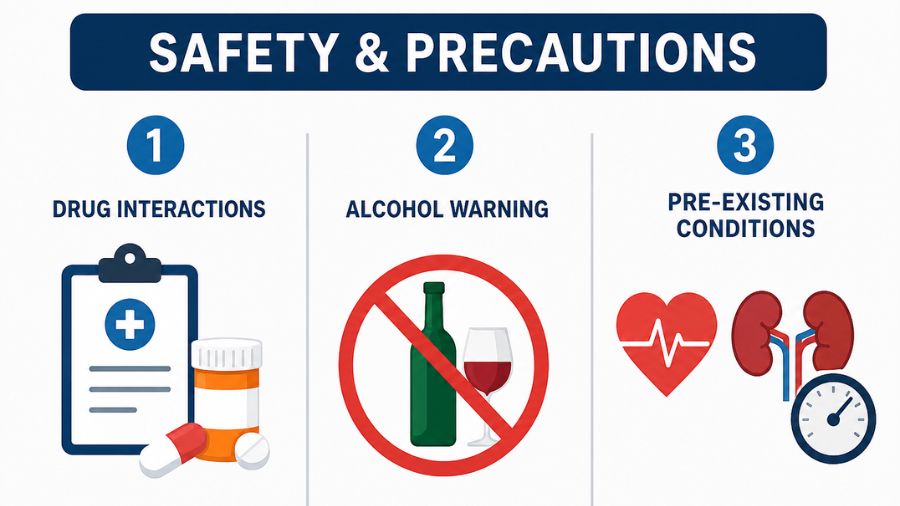
Before you start treatment, there are a number of protective factors to discuss with your healthcare provider.
1. Drug Interactions – Tizanidine interacts badly with a number of other drugs. Don’t take Tizanidine if you are already using –
- Ciprofloxacin (Cipro) – A standard antibiotic.
- Fluvoxamine (Luvox) – Utilized for OCD and depression.
2. Alcohol Warning – Alcohol remarkably enhances the sedative effects of Tizanidine. Drinking while on this medication can result in risky levels of drowsiness and slowed breathing.
3. Pre-existing Conditions – Speak to your doctor if you have a history of liver problems or kidney problems, as these organs are responsible for processing and clearing the medication from your system.
The Role of Tizanidine Manufacturing – Contract and Third-Party Pharma

Have you ever wondered how a particular medication, like Tizanidine tablets IP 2 mg, stays constantly available at your local pharmacy? It is hugely important because of the effectiveness of contract manufacturing in pharmaceutical industry.
A third party pharmaceutical manufacturer is a corporation that produces drugs for other brands. This permits a pharmaceutical brand to concentrate on research and marketing while the manufacturing professionals manage the high-tech production of the tablets.
1. Cost-Efficiency – It is more affordable for a brand to outsource production than to make its own huge factory. This assists in keeping medicine costs lower for the customer.
2. Quality Control – Third party pharma manufacturing companies should follow stringent international protection standards. They utilize modern machinery to make sure every tablet has the precise amount of active ingredient.
3. Scalability – When there is a sudden high need for a muscle relaxant, these manufacturers can rapidly enhance production to control shortages.
Conclusion
Tizanidine is a strong tool for those who suffer from chronic muscle spasticity. Being aware of your dosage, watching for side effects, and following your doctor’s safety recommendations can help improve your quality of life and restore your mobility.
Always remember that medication is just part of the journey. Tizanidine often works best when combined with physical therapy or other lifestyle changes recommended by your medical team.
Also Read: Best Iron and Folic Acid Syrup Manufacturers in India