

The Role of Biotechnology in India’s Pharmaceutical Industry
The Indian pharmaceutical industry has long been renowned as the pharmacy of the world, a powerhouse in generating cost-effective, top-quality generic medicines. This standing was formed on the invention of procedures and effective pharmaceutical manufacturing.
However, the worldwide healthcare landscape is quickly growing, moving from conventional chemical-based drugs to complex, living-cell-based treatments. This change marks the moment where biotechnology in India comes into the spotlight, not only as a supporting player, but as the major driver of the future development of the Industry.
Nowadays, biotechnology is injecting fresh life, invention, and huge value into the industry. From growing life-saving vaccines at record speeds – an ability outlined during the current worldwide health crisis – to leading the next generation of complicated medicines, biotech is changing the role of India from a generic manufacturer to a worldwide hub for sophisticated biopharmaceuticals. This monumental transformation is powered by increased R&D, strategic government support, and the emergence of specialized Biotech companies in India.
Let’s find out the deep and multifaceted part of biotechnology in this change, looking at new product growth, the vital growth of contract manufacturing in pharmaceutical industry in India, and the crucial role of trusted partners such as Medella Softgel in making these new biotechnology products accessible to the world.
The Core Role of Biotechnology in Product Transformation
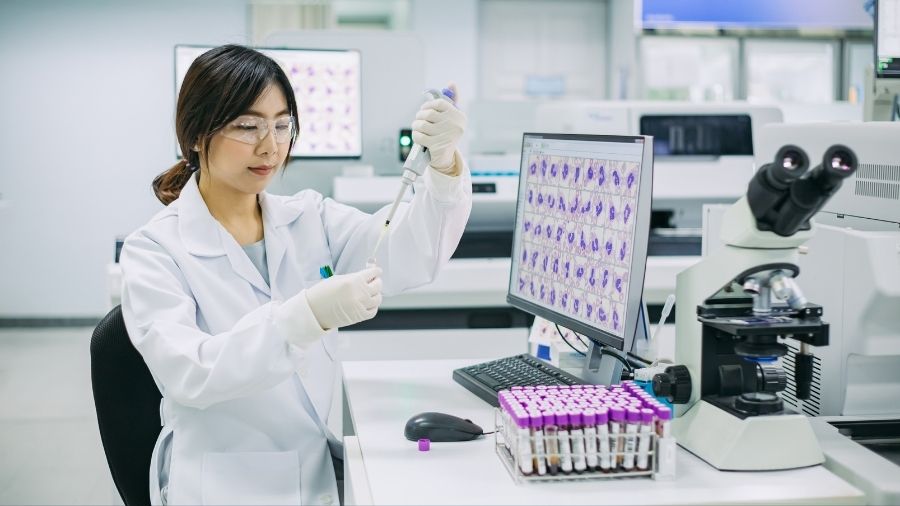
Biotechnology isn’t only a buzzword; it represents a fundamental shift in the kind of medicine India manufactures. This change is moving the nation over its conventional power in small-molecule generics toward the far more complicated and high-value domain of biologicals.
Key Roles
1. From Generics to Biologics and Biosimilars
The biggest effect of biotech is the invention of a new classification of medicines – Biologics. Unlike small-molecule generics, biologics are huge, complicated protein-based molecules developed inside living systems, like cells or microorganisms. They treat conditions such as cancer, rheumatoid arthritis, and autoimmune diseases far more efficiently.
As the patents for several original biologic medicines expire worldwide, Biotech companies in India are taking advantage of their specialization to make biosimilars. A biosimilar is crucially a generic version of a biologic, an extremely similar, immensely effective, and far more cost-effective option.
The strength of India in cost-effectiveness, top-quality pharmaceutical manufacturing in India is an ideal match for this segment. In fact, Indian possesses a remarkable share, around 20%, of the worldwide biosimilar growth pipeline. This status permits the Indian pharma sector to capture a huge new worldwide market while upholding its mission of delivering affordable healthcare solutions.



2. Revolutionizing Vaccine Production
The position of India as a vaccine superpower precedes the biotech boom, but biotechnology is supercharging this segment. India recently presented an astonishing 655 million doses of the world’s vaccines, making it the most crucial supplier for worldwide public health support.
The COVID-19 pandemic has ideally shown the crucial intersection of biotechnology in India and its manufacturing might. Biotech companies such as the Serum Institute of India and Bharat Biotech, conventionally renowned for traditional vaccines, rapidly adapted and even pioneered new technologies.
The pace at which India has grown and scaled up production of both conventional and novel vaccine outlets demonstrated the maturity of the sector. Advanced biotech permits the growth of extremely specific, faster-to-produce vaccines, such as those depending on mRNA and DNA platforms, protecting India’s continued leadership in worldwide disease control.
3. Advanced Diagnostics and Personalized Medicine
Beyond treatment, biotechnology is revolutionizing how diseases are recognized and handled. Advances in genomics and molecular biology allow the invention of extremely precise biotechnology products for diagnostics, like quick testing kits and sophisticated molecular assays that can find cancer or infectious diseases at their earliest phases.
Looking ahead, this technology is the basis of personalized medicine. By researching a patient’s remarkable genetic code, doctors can determine precisely which drug will be most useful for them, decreasing the trial-and-error system. This move towards accurate healthcare is a prime concentration for R&D within the Indian pharmaceutical industry, promising treatments that are both safer and remarkably more useful.
Strengthening the Manufacturing Backbone – The Role of CMOS
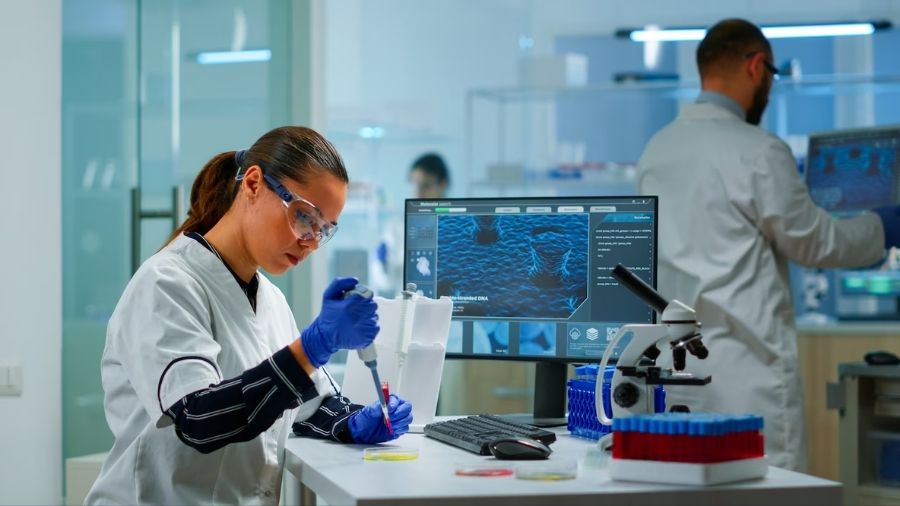
The change to biotech means manufacturing has become hugely more complicated. You cannot make a biologic in the same facility where you make an easy pill. This technical need has made a broad demand for professional manufacturing partners.
1. The Evolution of Pharmaceutical Manufacturing in India
Manufacturing complicated biotechnology products demands an extremely specialized structure, huge bioreactors to develop cell cultures, extremely regulated clean rooms, and broad testing to make sure product stability and protection. Building and sustaining these facilities is highly expensive.
For several rising biotech companies in India, particularly startups paying attention purely to research and development, making a facility is an impossible hurdle to entry. Even big setup pharma players usually prefer to concentrate their capital on drug discovery instead of expanding specialized manufacturing ability. This difficulty has fueled the huge evolution of outsourcing.
2. The Rise of Contract Manufacturing Organizations (CMOs)
This is where the contract manufacturing in pharmaceutical industry model, usually managed by a third-party pharma manufacturing company, becomes crucial.
Contract manufacturing is when a pharma company appoints a specialized professional to manufacture a drug on its behalf. These partners are renowned pharma contract manufacturing organizations. The growth of effective and quality-focused third party pharma manufacturing companies in India is one of the amazing success stories of the advanced Indian pharma sector.
Why do corporations utilize them?
- Cost-effective and scalable – CMOs provide adaptable ability, permitting corporations to scale production up or down without large upfront investments.
- Speed-to-Market – Outsourcing production accelerates the timeline, assisting inventive biotechnology products in reaching patients quickly.
- Regulatory Excellence – The finest CMOs sustain top-class adherence norms, complying with worldwide policies such as WHO-GMP and USFDA needs, which is crucial for worldwide market access.
Spotlighting a Key Partner – Medella Softgel

In this vital pharma contract manufacturing ecosystem, specialized manufacturers such as Medella Softgel stand out. Medella Softgel is a leading third-party pharma manufacturing company in India that plays a crucial part in bringing particular, top-quality drug formulations to the market.
Medella Softgel is renowned for its distinct proficiency, especially in the manufacturing of sophisticated dosage forms such as softgel capsules. Softgels provide exceptional bioavailability and patient convenience, making them a well-liked and efficient way to administer a range of medications, vitamins, and supplements.
Medella Softgel is a reliable partner that provides a full manufacturing solution, from locating raw materials to packaging. Their manufacturing plants follow strict WHO and GMP (Good Manufacturing Practice) guidelines, guaranteeing that every pharma products manufactured meets global quality benchmarks.
Their dedication to quality is non-negotiable. Medella Softgel offers dependable, superior pharmaceutical manufacturing in India, which is an increasing number of businesses that wish to introduce novel products but lack the specialized facilities required in order to be successful.
Government Initiatives and Ecosystem Support for Biotechnology in India
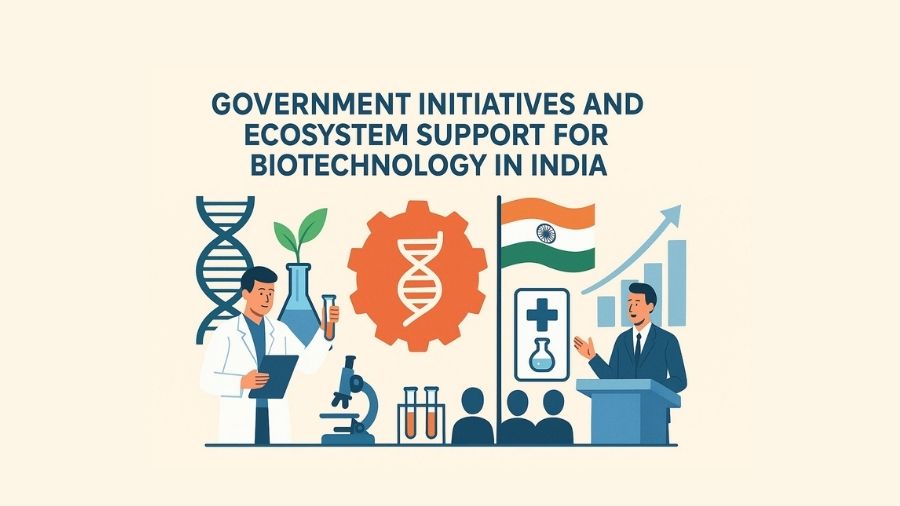
Biotechnology in India revolution is not occurring in a vacuum the government is providing strong, strategic support. A number of programs have been started to establish a supportive ecosystem in recognition of the importance of biotechnology to the country’s economic and health security.
A. Funding and Strategic Policies
With a goal of a multibillion-dollar bioeconomy by 2030, the government has set an ambitious goal to make India a global center for biomanufacturing.
Important projects consist of –
- ‘Make in India’ for Biotech – Biotech’s “Make in India” policy promotes domestic manufacturing to lessen dependency on imports, especially for active pharmaceutical ingredients (APIs).
- Bio-E3 and Bio-RIDE – Early-stage R&D, infrastructure development, and entrepreneurship in the biotech industry are all significantly financed and supported by the Bio-E3 and Bio-RIDE initiatives. The Indian pharmaceutical industry’s continued growth is based on these policies.
B. Fostering Innovation through Startups
The proliferation of new biotech companies in India is among the most exciting trends. India now has an estimated 9,000 biotech startups, up from just 50 ten years ago, thanks to government incubators and easier access to seed money.
These startups, which concentrate on specialized and high-risk fields like advanced diagnostics, rare disease treatments, and innovative drug discovery, are the engine behind new biotechnology products.
These fledgling businesses are given access to the infrastructure—high-priced lab equipment, specialized research support—that they would not be able to afford on their own, thanks to the creation of biotech parks and incubators.
C. Talent Pool and Skill Development
One of India’s biggest advantages is its large reservoir of highly qualified scientific talent, which supports the development of biotechnology in the nation. Every year, India produces a significant number of engineers, life scientists, and science graduates.
The human capital required for the intricate R&D and precision pharmaceutical manufacturing in India required for biotech, is provided by this highly qualified, English-speaking workforce. This steady flow of talent gives Indian biotech companies a significant competitive edge over their international counterparts.
Challenges and the Road Ahead for Indian Pharma
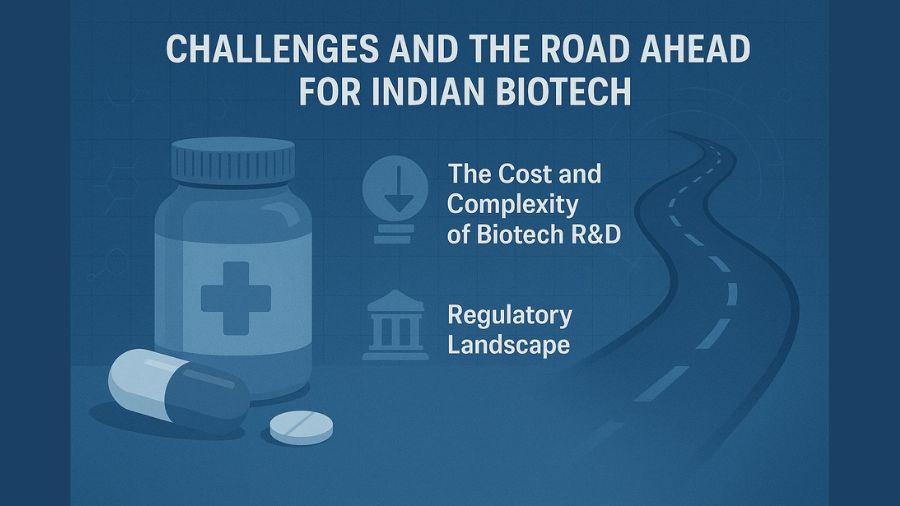
Although the future appears bright, there are obstacles in the way of becoming a global leader in biotechnology. To reach its full potential, the Indian pharmaceutical industry must overcome several obstacles.
A. The Cost and Complexity of Biotech R&D
It takes a lot more money and effort to develop a new biologic or innovative biotechnology product than it does to make a generic medication. Success is not assured, and the R&D cycles are lengthy—usually lasting ten years or longer. High-risk patient capital is needed for this.
Securing steady, substantial private and public investment to equal the R&D expenditures observed in Western markets is a challenge for biotech companies operating in India. The industry needs to shift from a cost-arbitrage-only model to one that is fueled by in-depth, proprietary innovation.
B. Regulatory Landscape
The current regulatory frameworks are frequently unable to keep up with the rapid pace of biotech innovation. To guarantee safety without limiting innovation, new technologies such as gene editing and cell therapies need specific and unambiguous regulations.
For innovative biotechnology products to be approved more quickly and for quality standards to remain world-class, the government must maintain a dynamic and effective regulatory environment. This is especially important for third-party pharmaceutical manufacturing companies in India looking to export internationally.
Future Vision – The $300 Billion Bioeconomy

The trajectory is obvious in spite of the difficulties. The success of biotechnology in India is a key component of the Indian government’s 2030 bioeconomy target of $300 billion.
Traditional generic excellence and state-of-the-art biotech innovation coexist in the Indian pharmaceutical industry’s future. With the help of innovative biotech companies in India and effective supply chain partners like Medella Softgel in the pharmaceutical industry segment, India will continue to provide the world with necessary generics while also emerging as a major producer of sophisticated, innovative medications.
Securing the Future of Global Health

The most exciting phase of the Indian pharmaceutical industry’s history is about to begin. India’s embrace of biotechnology is a significant redefining of its global role, not just an improvement. India’s embrace of biologics, biosimilars, and advanced diagnostics is transforming the country from the “Pharmacy of the World” into one of the most important global centers for high-tech, reasonably priced biomanufacturing.
The biotech revolution in India is ultimately about more than just economic expansion; it’s about carrying out a global duty by applying science and scale to ensure a healthier, more just future for all.
Also Read: Orthopedic Products Manufacturers in India: Driving Healthcare Growth