
Pharma Product Packaging: Types, Standards and Best Practices
Pharma product packaging has three levels: primary, secondary, and tertiary. Each level helps keep medicines safe during storage and transport. It also helps identify products, maintain quality, improve patient safety, and ensure compliance.
Pharmaceutical product packaging plays a key role in keeping medicines safe, effective, and pure from the factory to your medicine cabinet. Patient health depends on it, so it must follow required industry rules. Packaging protects medicines from light, air, and moisture. But do you know how pharma companies and third-party manufacturers choose the right materials? Read on to learn about the different types of medical packaging, top best practices, how packaging improves patient care, and more.
Why Is Pharma Product Packaging Important?
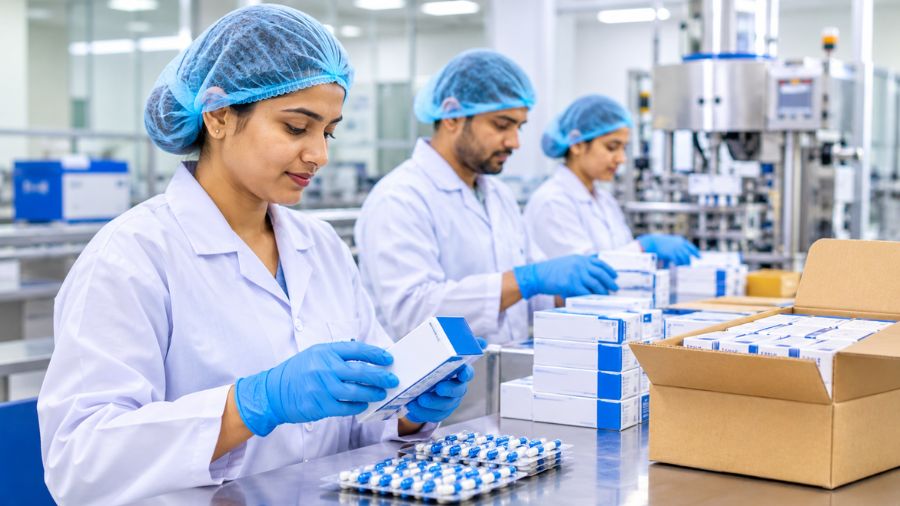
Pharmaceutical packaging protects medicines, keeps them safe, and provides key information to patients.
Here is why it is important:
- Protecting the Medicine: Pharma packaging solutions shield medicines from light, moisture, air, and heat. Without this, the API inside the drugs could quickly break down, making them completely ineffective and unsafe for patients.
- Providing Crucial Information: Medicine labels show important details, like the name of the drug, the correct dose, the batch number, and the manufacturing and expiration dates. This clear information helps both doctors and patients.
- Ensuring Patient Safety: Special packaging features include child-proof caps and protective seals. This stops children from accidentally swallowing medicine. Their designs also show if a bottle has been opened before and ensure patients always receive genuine medical products.
- Extending Shelf Life: Top-grade pharma packaging materials keep medicines effective. By preventing contamination, packaging ensures the medicine remains completely safe to use until its expiration date.
- Supporting Storage & Transport: Packaging protects medicines from damage during shipping, loading, and warehouse storage. It ensures they arrive at pharmacies and hospitals in perfect and usable condition.



Different Types of Pharmaceutical Packaging
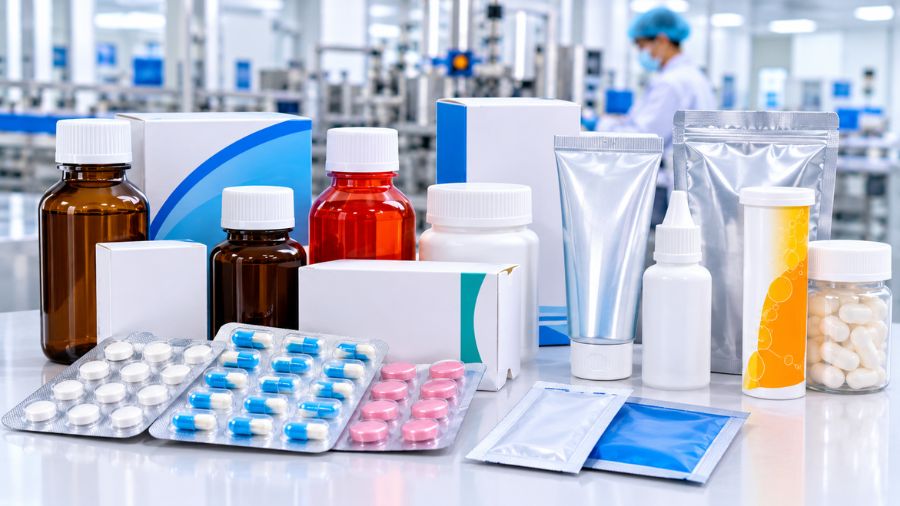
Pharm product packaging is divided into three main levels based on its contact and function with the product:
1. Primary Packaging (Direct Contact)
Primary or sales packaging is most important for pharma companies. It is the first layer of enclosure that directly touches the pharma product. Its main job is to keep the drug safe and chemically stable. If primary packaging is not selected correctly, it can affect the quality and purity of the medicines. So, a trusted pharma company or third party pharmaceutical manufacturer must use non-reactive materials.
- Blister Packs: Pharma blister packaging is the most common primary pharma packaging type. These are made from thermoformed plastic and hold pills or capsules in individual plastic bubbles supported by a foil sheet. They keep each dose clean and easy to pop out one by one.
- Bottles & Jars: These are made from glass or plastics like PET, HDPE, and PP and often feature child-proof caps. These are used to store large numbers of tablets, capsules, or liquid syrups. Dark glass bottles are often used for liquid medicines and plastic bottles for tablets and capsules. These protect the medicine from harmful UV light.
- Ampoules: These are small, single-dose sealed glass or plastic containers or tubes used for liquid injection. They hold only a single dose of medicine and must be opened right before use. These are more expensive than other types of pharmaceutical packaging.
- Vials: These small glass or plastic bottles or containers have a rubber stopper on top. They are used to hold liquid, solid, or powder medicines (often accessed using a syringe without opening the whole seal). Compared to ampoules, they are bigger in size.
- Sachets & Strip Packs: These are small, flat pouches made of paper, foil, or plastic. They hold single doses of powders, gels, or individual pills. Mostly, this type of pharmaceutical product packaging is used for powder-based medicines.
2. Secondary Packaging (Outer Protection & Branding)
Secondary packaging doesn’t touch the medicine itself but groups primary packs together. It sits outside the first layer and provides extra protection. It holds multiple units together and displays brand logos and important details like how to use and expiry dates.
It also contains the manufacturer’s name and address.
- Paperboard Cartons & Boxes: These folded paper boxes hold individual items like a single bottle or blister pack. They list dosage guides, manufacturer details, barcodes, and other details.
- Bundles & Multi-Packs: These shrink wraps and paper sleeves are used to group several small cartons or primary unit boxes together. They make stock easier to count, move, and sell on store shelves.
3. Tertiary Packaging (Bulk Handling & Transport)
Tertiary packaging manages bulk shipping. It protects thousands of medicine units while they travel from factories to warehouses and hospitals. This prevents breaking, crushing, and damage during long-distance road or air transport. The end consumers (patients) don’t see this packaging, but it is very important for smooth shipping.
Retailers often remove it before they sell medicines in their stores and clinics.
- Corrugated Cardboard Shipping Boxes: These are thick, multi-layer cardboard boxes. These are used to pack dozens of secondary boxes together and absorb heavy shocks and keep goods safe during transit.
- Pallets & Stretch Wrap: These are large wooden or plastic platforms stacked with heavy shipping boxes. Plastic film wraps around the whole stack to ensure nothing falls or shifts during transit.
Most Common Pharma Packaging Materials
Pharma product packaging depends on specific materials to protect medicines from moisture, light, and contamination.
| Material Type | Common Applications | Key Benefits |
| Plastics (PVC, PET, HDPE) | Blister packs, pill bottles, intravenous (IV) bags, and diagnostic vials. | Lightweight, versatile, shatterproof, and cost-effective for high-volume production. |
| Glass (Type I, II, III) | Ampoules, vials, pre-filled syringes, and liquid medicine bottles. | Excellent chemical resistance, impermeable to gases, and easily sterilized for injectables. |
| Aluminum & Foils | Blister pack backings, push-through foils, and ointment tubes. | Provides a 100% complete barrier against light, oxygen, moisture, and odors. |
Key Medicine Packaging Requirements & Quality Standards
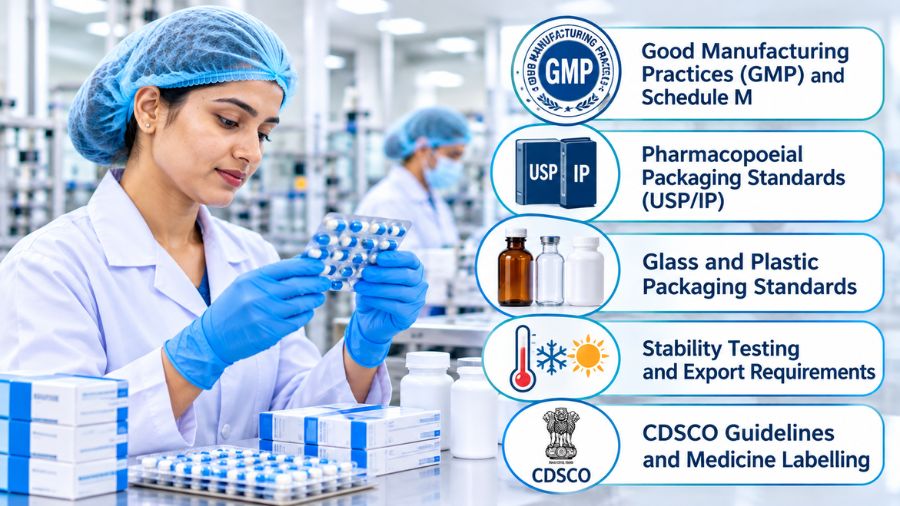
Pharma companies and third-party manufacturers must follow proper medicine packaging requirements and quality standards to protect patients and avoid legal problems.
1. Good Manufacturing Practices (GMP) and Schedule M
GMP and Schedule M compliance guidelines require manufacturers to maintain clean production areas, use properly maintained machines, and follow safe packaging practices. Companies should work with a trusted third party pharmaceutical manufacturer that follows these guidelines.
2. Pharmacopoeial Packaging Standards (USP/IP)
Manufacturers must follow USP and Indian Pharmacopoeia guidelines for pharmaceutical packaging. They need to choose compatible materials that protect medicines and maintain their quality during storage and use.
3. Glass and Plastic Packaging Standards
Manufacturers test glass and plastic containers carefully to ensure they are medical-grade, durable, and will not release any harmful chemical impurities into the stored medicines.
4. Stability Testing and Export Requirements
Experts test packaging medicines under extreme heat and humidity to ensure they will stay safe over time. Testing is also important to match the necessary regulatory standards needed for international shipping.
5. CDSCO Guidelines and Medicine Labelling
CDSCO’s strict guidelines for printing clear labels showing expiry dates, batch numbers, and warnings must be followed. This ensures patients and doctors always have vital safety information about the medicines.
How to Improve Pharmaceutical Product Packaging: 6 Best Practices

Improving your pharmaceutical product packaging is necessary to keep medicines effective and fully compliant with applicable standards.
- Regulatory & GMP Compliance: Meeting applicable medicine packaging requirements, GMP standards, and global rules ensures that every batch is safe for public use. Manufacturers follow these guidelines to avoid costly product recalls, easily pass inspections, and sell medicines in different countries.
- Material Selection & Barrier Performance: Choosing the right types of pharmaceutical packaging protects medicines from moisture, air, and light. Suitable films and foils keep medicines safe and maintain their quality until the expiry date.
- Automation & Process Efficiency: Modern pharmaceutical packaging solutions use automated machines to speed up production and reduce human errors. These machines help count pills, seal bottles, and pack boxes while saving time and reducing waste.
- Labeling Accuracy & Digital Traceability: Whether you manufacture products in-house or work with a trusted third party pharmaceutical manufacturer, make sure every label has the correct batch number, tracking code, and expiry date. Barcodes and serial numbers also help companies track products during shipping and reduce the risk of fake medicines entering the market.
- Ensure Packaging Compatibility: It is important to test how pharma packaging materials react with the medicine. Choose a material that doesn’t react chemically with the medicine. Compatibility testing ensures that harmful chemicals do not leak into the drug and alter its chemical balance.
- Protective & Transit Packaging: Strong outer boxes and proper shipping containers protect medicines during long-distance transport. If you choose contract manufacturing in pharmaceutical industry, choose a partner that uses good transit packaging to protect delicate medical supplies from breaking, crushing, and harsh temperatures.
How to Choose a Trusted Third Party Pharmaceutical Manufacturer?

If you are planning to work with a third party pharmaceutical manufacturer, you must focus on these points before making the final selection:
1. Check Manufacturing Experience: You must choose a manufacturer with good experience in producing different pharma products. You have to check their product range, manufacturing capacity, and past work before making the final choice.
2. Review Quality Standards: You have to confirm that the manufacturer follows GMP and other applicable quality guidelines. You must ask about their testing procedures, quality checks, and paperwork.
3. Check Packaging Capabilities: Choose a manufacturer that offers the required pharmaceutical packaging solutions for different products. You have to ask whether they provide bottle packaging, strip packaging, and others based on your needs.
4. Understand Production Capacity: You must confirm whether the manufacturer can handle your required order quantity and delivery schedule. Their production capacity should also support your future business needs.
5. Ask About Raw Materials & Product Testing: You should also ask about how the manufacturer sources raw materials and checks finished products. Proper testing is a must to maintain product consistency and quality across batches.
6. Review Pricing & Delivery Terms: You must compare costs, MOQs, packaging charges, and delivery timelines of different manufacturers. You have to ask for clear pricing and confirm all terms before signing the contract.
Secure Your Supply Chain with Medella Softgel
Choosing the right pharma packaging is a must to keep medicines effective, build consumer trust, and avoid legal issues. Companies planning to invest in contract manufacturing in pharmaceutical industry must choose an expert manufacturer that offers different packaging solutions, has a wide product range, and has good experience.
Secure your supply chain with a trusted pharma manufacturing partner. Connect with Medella Softgel, a leading name among the top contract manufacturers in India, to get quality and custom pharma product packaging solutions. Whether you need bulk softgels or a special packaging solution, our expert team can help with anything. Contact us, share your needs, and learn more about our services and products today.
Also Read: Top 10 Tablet Manufacturing Companies in India: A Complete Guide