
Drug Manufacturing License in India – Requirements, Process & Cost
Getting a drug manufacturing license in India is a crucial step for any business looking to manufacture and sell pharmaceuticals in the country’s booming pharmaceutical industry. Understanding the requirements, process timelines, and costs is crucial, regardless of whether you’re an entrepreneur looking to scale through partnerships or a start-up planning to set up your own facility.
We will explain the function of a third-party pharma manufacturing company in India, walk you through the entire pharma manufacturing license india application process, and show you how third party manufacturing pharma agreements can hasten your market entry.
The Regulatory Landscape For Drug Manufacturing License

In India, pharma manufacturing license in india are issued under the joint supervision of the Central Drugs Standard Control Organization (CDSCO) and the corresponding State Drug Control Authorities.
The 1940 Drugs and Cosmetics Act and its 1945 Regulations govern the granting of licenses.
Two main categories of pharma manufacturing licenses exist –
1. Regular Manufacturing License – A regular drug manufacturing license enables you to produce medications for sale on your own property.
2. Loan License – A pharma loan license enables you to use a third party pharmaceutical manufacturer’s facility; you supply the product’s raw materials, packaging, and labeling, and the third-party pharmaceutical manufacturer makes it under your name.
Depending on your go-to-market timeline, in-house capabilities, and investment capacity, you can choose the appropriate category.
Selecting the right category depends on your investment capacity, in‑house capabilities, and go‑to‑market timeline.



Key Requirements for a Drug Manufacturing License

A. Facilities and Facilities
1. Registered Address – A non-residential commercial building that has been authorized by the local government must serve as the registered address.
2. Separate Zones – Specialized spaces for storage, quality assurance, packaging, and manufacturing.
3. HVAC and water – Controlled temperature/humidity (HVAC) for critical zones and purified water systems (WFI or PW).
B. Tools and Verification
1. Equipment List – Comprehensive list of all the machines, including schedules for calibration and maintenance.
2. Validation – Procedures for critical equipment’s Installation Qualification (IQ), Operational Qualification (OQ), and Performance Qualification (PQ).
C. Personnel and Expertise
1. Qualified Technical Staff – “Competent Technical Person(s)” refers to a minimum of full-time technical personnel (B.Pharm/M.Pharm).
2. Quality Control Unit – At least two certified chemists or microbiologists to supervise stability research and laboratory testing make up the quality control unit.
D. Systems for Quality Management
1. Standard Operating Procedures (SOPs) – Written guidelines for change control, validation, cleaning, and manufacturing.
2. Registered Contracts – Make sure the terms of the contract are explicit and address quality, intellectual property, and regulatory compliance if you collaborate with a third party manufacturing pharma.
Step‑by‑Step Application Process

1. Application formulation – Forms 27 and 27A for pharma loan licenses or Forms 24 and 24A (for various drug schedules). Provide a thorough site master file, equipment specifications, and staff qualifications.
2. Submission to Licensing Authority – Send your work to the State FDA or CDSCO in hard copy or online, if available. Pay the required application fee, which varies depending on the state and category.
3. Pre-Inspection Review – The authority checks the accuracy of the documentation. Any questions must be answered within the allotted time, which is typically 30 days.
4. Site Inspection – A drug inspector audits the premises, machinery, procedures, and documentation on-site. Minor observations may be resolved by corrective action; findings are documented in an inspection report.
5. License Grant – Usually 60 to 90 days after application, the drug license is granted following a satisfactory inspection and document verification. The pharma manufacturing license India can be renewed prior to its expiration and is valid for one to five years.
Cost Breakdown
There are two primary components to the cost of obtaining a drugs manufacturing license in India –
| Cost Component | Typical Range (INR) |
| Application Fee | 5,000 – 25,000 |
| Inspection Fee | 10,000 – 50,000 |
| License Grant Fee | 5,000 – 15,000 |
| Renewal Fee (per 5-year cycle) | 10,000 – 30,000 |
| Infrastructure Setup & Validation | 5 lakh – 50 lakh* |
| Personnel Recruitment & Training | 2 lakh – 10 lakh |
Extremely variable according to location, automation level, and scale.
Utility connections, lab equipment purchases, and consulting fees are examples of additional expenses. Working with a third-party pharma manufacturing company in India can drastically lower upfront costs for business owners on a tight budget.
Why Choose Third Party Pharma Manufacturing?
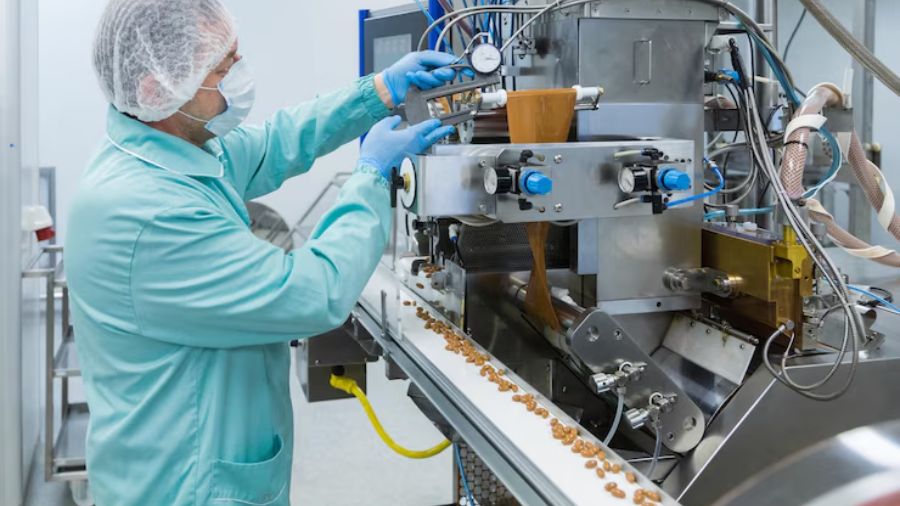
There are various benefits to working with a third party pharmaceutical manufacturer –
1. Reduced Capital Expenditure – There is no need to make significant investments in buildings, machinery, and land.
2. Faster Market Access – Make use of the partner’s validated procedures and current pharma manufacturing license India to launch the pharma products more quickly.
3. Scalability – The ability to quickly adjust production levels to meet changing market demands.
4. Regulatory Compliance – Reducing audit risks, reputable third party manufacturing pharma partners uphold strong quality systems.
When assessing partners, give preference to those who have transparent pricing structures, a track record of success in your therapeutic segment, and WHO-GMP certification.
Selecting the Right Third Party Pharma Partner

Take into account the following factors to optimize third party manufacturing pharma’s benefits –
1. Regulatory Certifications – High compliance standards are indicated by WHO-GMP, ISO 9001, and US FDA approvals.
2. Technical Proficiency – Extensive knowledge of dosage forms, including injectables, tablets, capsules, and nutraceuticals.
3. Flexibility and Capacity – Sufficient capacity for your starting volumes, with scalability in mind.
4. Infrastructure for Quality Control – Internal analytical labs, stability chambers, and microbiology facilities.
5. Geographic Proximity – Being close by can make inspections easier and lower logistics costs.
To protect the reputation of your brand, draft a comprehensive contract that specifies roles, deadlines, quality metrics, and sanctions for non-compliance.
Common Challenges and How to Overcome Them
1. Documentation Gaps – Approvals are delayed by disorganized files.
Solution – Make use of a Drugs and Cosmetics Rules-aligned checklist.
2. Inspection Non-Conformities – Small mistakes in record-keeping or housekeeping may lead to observations.
Solution – Every quarter, carry out internal audits and simulated inspections.
3. Staffing shortages – Recruiting competent employees in remote areas can be challenging.
Solution – Hire contract technical consultants or collaborate with regional employment agencies.
4. Infrastructure Delays – Schedules for validation and construction frequently fall behind.
Solution – Early in the project plan, start utility procurements and site preparation.
These risks can be reduced and a more seamless drug licence process can be guaranteed by proactive planning and hiring knowledgeable consultants.
Maintaining Compliance Post‑License
Getting the pharma manufacturing license in India is only the first step.
To maintain product quality and protect your license –
1. Renew on Time – Send in your applications for renewal at least ninety days prior to the expiration date.
2. Continuous Training – Educate staff on new regulations, including CDSCO’s updated schedules, and cGMP.
3. Periodic Audits – Hire external auditors once a year and conduct internal audits every six months.
4. Pharmacovigilance – Put in place a mechanism to record and communicate adverse events while ensuring patient safety.
Robust post-license governance guarantees continuous operations and enhances your standing with both customers and regulators.
Conclusion
Obtaining a third party manufacturing license in India necessitates meticulous preparation, copious documentation, and strict adherence to pharma loan license and third party manufacturing GMP guidelines. The correct approach can significantly cut down on time-to-market and capital expenditure, regardless of whether you choose to use a third-party pharmaceutical manufacturing company in India or a full-scale in-house facility.
By partnering with a seasoned manufacturer like Medella Softgel, you gain access to industry expertise and proven systems. This collaboration, along with adherence to best practices such as conducting simulated audits and maintaining stringent quality controls, places you in an ideal position to introduce safe, effective medications to the market.
Accept this manual as your road map and set out on a prosperous journey in the vibrant pharmaceutical sector of India with Medella Softgel as your trusted partner.
Also Read: Best Anti-Diabetic Medicine Manufacturing Company in India